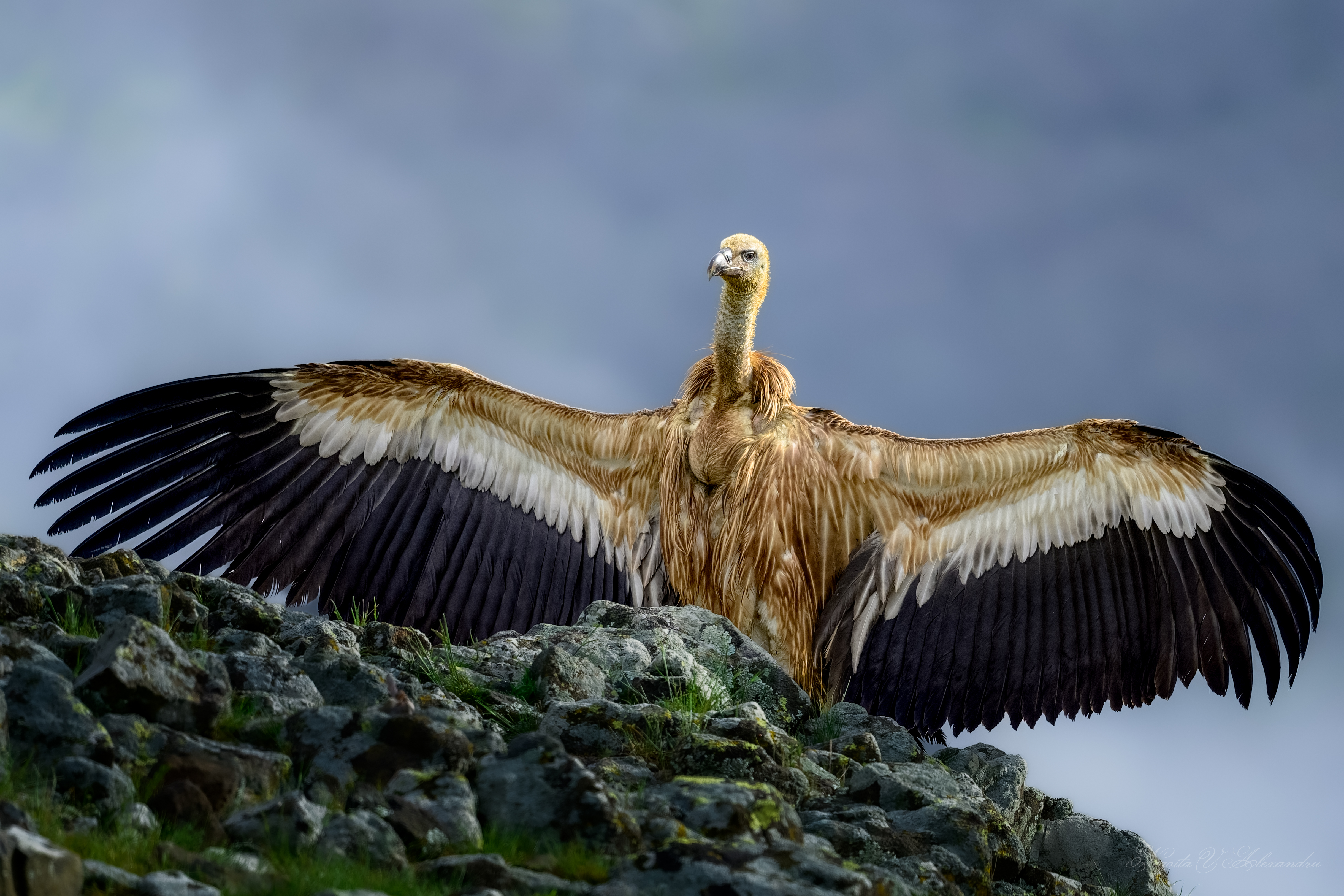
Among the images I saw a few years ago at a photography course, one stayed with me more than all the others. A vulture in flight, large, imposing. That kind of presence that makes you forget you’ve been struggling for 10 minutes to get a decent shot of a pigeon that won’t stay still.
For a second, I saw myself as the boy from How to Train Your Dragon, except my dragon would have feathers and wouldn’t seem at all interested in being trained. I liked that image… a lot, very much. But I quickly placed it into a safe category: “not for me”.
I told myself that maybe, one day, I would manage to capture a kestrel in a somewhat decent frame. But vultures? That would be the big league. That’s where professional photographers from YouTube go, “real” photographers and mentors for people like me… not us, the ordinary mortals who get excited when the focus is right when photographing a pole.
On top of that, I was convinced that such an experience costs as much as a serious vacation. And realistically speaking, what’s the point of spending a lot of money if you’re not yet at the level to get something out of it? You end up with no money and a memory card full of more or less questionable shots. So I left the idea there, for “someday”… after years of work, experience and, probably, a serious upgrade in self-confidence.
The trip starts to make sense
One day, I receive a link from my friend and photo trip partner. A site from Bulgaria, simple. Maybe too simple. The kind of site you look at twice before clicking anything and even then you cross yourself three times, say five prayers and ward off evil, just in case you’ve infected your computer.
On the page, written big: МАДЖАРОВО. And between the lines… vultures. Then I read “Hide” (observation point), photographers, birds of prey. It was starting to sound suspiciously good. Now I had the place, I had the subject. The classic problem remained: how much does this cost and do I need to check if I still have both kidneys?
In my head, the calculations had already started. Budget, days off and inevitably, a convincing story for my wife. Not that you leave home for vultures without a well-thought-out plan… or at least a good story told with enough confidence. Then I saw the price: 170 euros per person. Or 100 euros if we are at least two. I read it again. Then again. That’s it?
My entire mental construction of an “exclusive, inaccessible experience” collapsed in a few seconds. It was no longer a distant dream. It was the kind of expense you make and then pretend it never happened. Suddenly, vultures were no longer just for “others”!
All that was left was to choose the moment. I looked over the periods, discussed it again with my friend, postponed a bit… and we both reached a very well-defined conclusion for the photography window: “sometime in spring.”
In my head, the plan was already set: car — checked, location — checked, costs — checked. I had already started telling others how great it would be, as if I had already returned with cover-worthy shots. More than that, I even thought of turning everything into a mini family trip. If we’re going to Bulgaria anyway, why not all go together and also pass through the Rose Valley? Let it be good for everyone: me with the vultures, the family with the roses, and the wallet… well, let it see what it can handle.
Divine intervention
Everything seemed arranged. Too arranged. As if the Universe looked at us and said: “this is too nice, too simple, too good.” And decided to intervene.
The first hit came indirectly, to my friend. Not serious, but enough to disrupt our rhythm. We thought it would pass. It didn’t. Because immediately after, the second hit came, this time to me. The kind that leaves no room for negotiation. And just like that, our perfectly organized plan quietly returned to its favorite drawer: “maybe, someday”.
A period of readjustment followed: professional, personal… and photographic. I still managed to save something, right before the final blow: a vacation in Greece, where I combined beach time with the family and my outings through wetlands, chasing pelicans, storks and anything that had the decency to stay still for two seconds—as long as the family allowed it and didn’t declare me crazy. It wasn’t Madzharovo and vultures, but it was enough to not completely forget why I liked wildlife photography.
Full stop. And restart.
After a long winter and a period when photography was mostly on pause, the idea came back. This time, simpler. No big plans. No “someday”. In January, I opened my favorite booking site and searched: Madzharovo. The result? Three accommodation options. Tough decisions, right?
I chose one without much philosophy: two rooms, decent price, payment at the property. Sounds like luxury when you don’t have to pay upfront. I book, then make a short call to my partner in crime: “Official notice: this spring — Madzharovo, vultures. Accommodation sorted. Attendance mandatory. Any objections can be submitted later.”
The answer was exactly what I needed: “good thing you told me in advance.” Which, freely translated, means: “I have no escape, this is my fate now.” Next step: booking the photography day at the hide.
A few emails to the organization. A few days of total silence. At one point I was convinced my messages were being delivered on horseback to Bulgaria and coming back with a handwritten approval, only on sunny days. But eventually, the reply came. We had a reserved day. Saturday. The plan was finally becoming real.
We decided to leave on Friday, no rush. Anyway, with Bulgarian speed cameras, the whole “let’s go faster to arrive sooner” thing has become more of a distant memory. The only thing left that we couldn’t control was the weather.
And inevitably, I kept thinking about the classic scenario: rain, cold, no birds… and an entire day in the hide, staring at each other and wondering where we went wrong in life. But after all the effort to get there, it didn’t even matter anymore. This time, we were actually going.
Before the big day, I decided to call the people who would take us to the hide, to set the meeting point and departure time. The return, according to the website, was calculated using historical methods: after sunset. Done and done. I call, a short, sharp voice answers: “Yes!”. A “yes” that doesn’t reassure you at all, but at least confirms you didn’t call for nothing.
With my heart in my throat, I start discussing details. Everything is fine… until I tell him where we’re staying. A short pause, then: “Oh… OK… not so good. But I can meet you there. Take care!”
A “take care” that doesn’t sound like concern, but like a warning. Freely translated: “I hope you’re still alive when I come pick you up.” I hang up and call my friend:
“I don’t know how to say this without sounding dramatic, but our accommodation seems like the kind of place where sleep is guaranteed. Waking up, on the other hand, defies probability.”
The answer comes relaxed: “We go and see. We roll the dice on life and maybe it works out.”
The hair on my neck stood up instantly. I decided to sleep on it. Around midnight I wake up suddenly, in one of those moments when your brain decides it’s time to process every bad decision you’ve ever made. First thought: they haven’t charged me yet. Perfect!
In less than 10 minutes I was already on Booking, looking for something else. This time, with a simple criterion: to be sure there is a next day for us. I find something decent. Twin room, similar price. No more luxury of a room alone, but a much more important advantage: real chances of seeing the morning. I book immediately.
The next day, around noon, I call again to give them the new accommodation details and set the new meeting point. This time, the reaction is instant: “Yes! That’s good. It is newly renovated!”. Translation: “Well done, you picked the option where I don’t have to explain what happened to you.”
Finally, departure
The departure day arrives. The road starts classic: Romania towards Greece, summer vibes, like going to the seaside — because the Romanian coast has mastered the rare skill of combining Dubai-level prices with a fairground atmosphere.
At Ruse — traffic. About half an hour waiting. And that’s the good scenario since there’s no more border control. We’re in Schengen, but the bridge still seems to be negotiating with time. Work is ongoing on the Bulgarian side… at its own pace. One screw today, one bolt tomorrow… no rush, the process matters.
We finally cross and the good part begins. Long road, but relaxed. No rush, no speed experiments — as mentioned, Bulgarian radars don’t appreciate enthusiasm. Around 600 km ahead. Music, stories, landscapes.
My friend, being a motorcyclist, has crossed Bulgaria in every direction, so we also get a built-in tour guide. We pass by Veliko Tarnovo. We quickly add it to the “next time” list, like all beautiful places we pass too quickly.
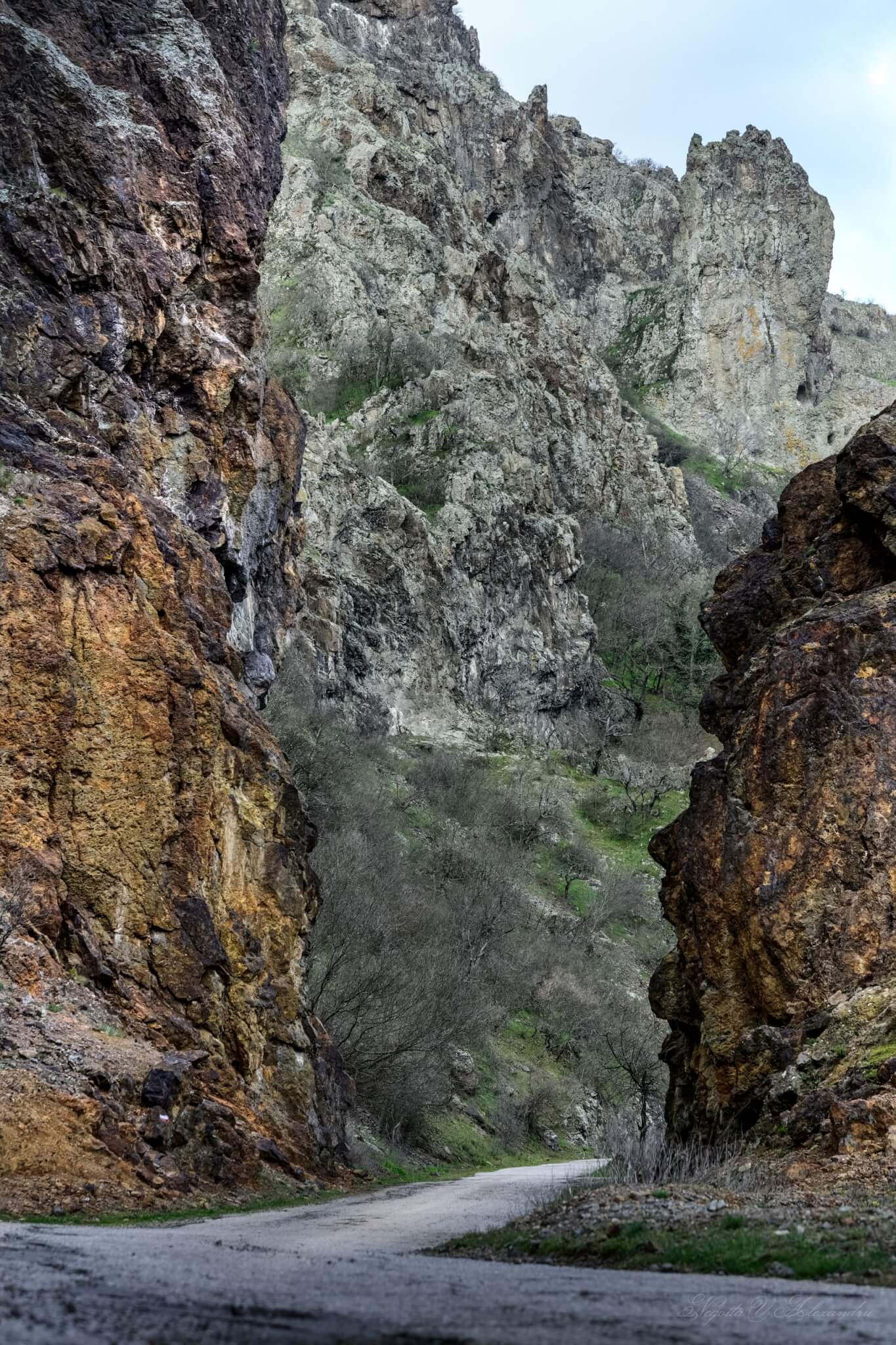
The last part of the road feels like going back in time. About 50 km of asphalt that looks like it was laid when people were still debating whether it was needed. You avoid one pothole and fall into two. At some point you start negotiating with the car: “just a bit more and I’ll let you rest.” But somehow, we arrive.
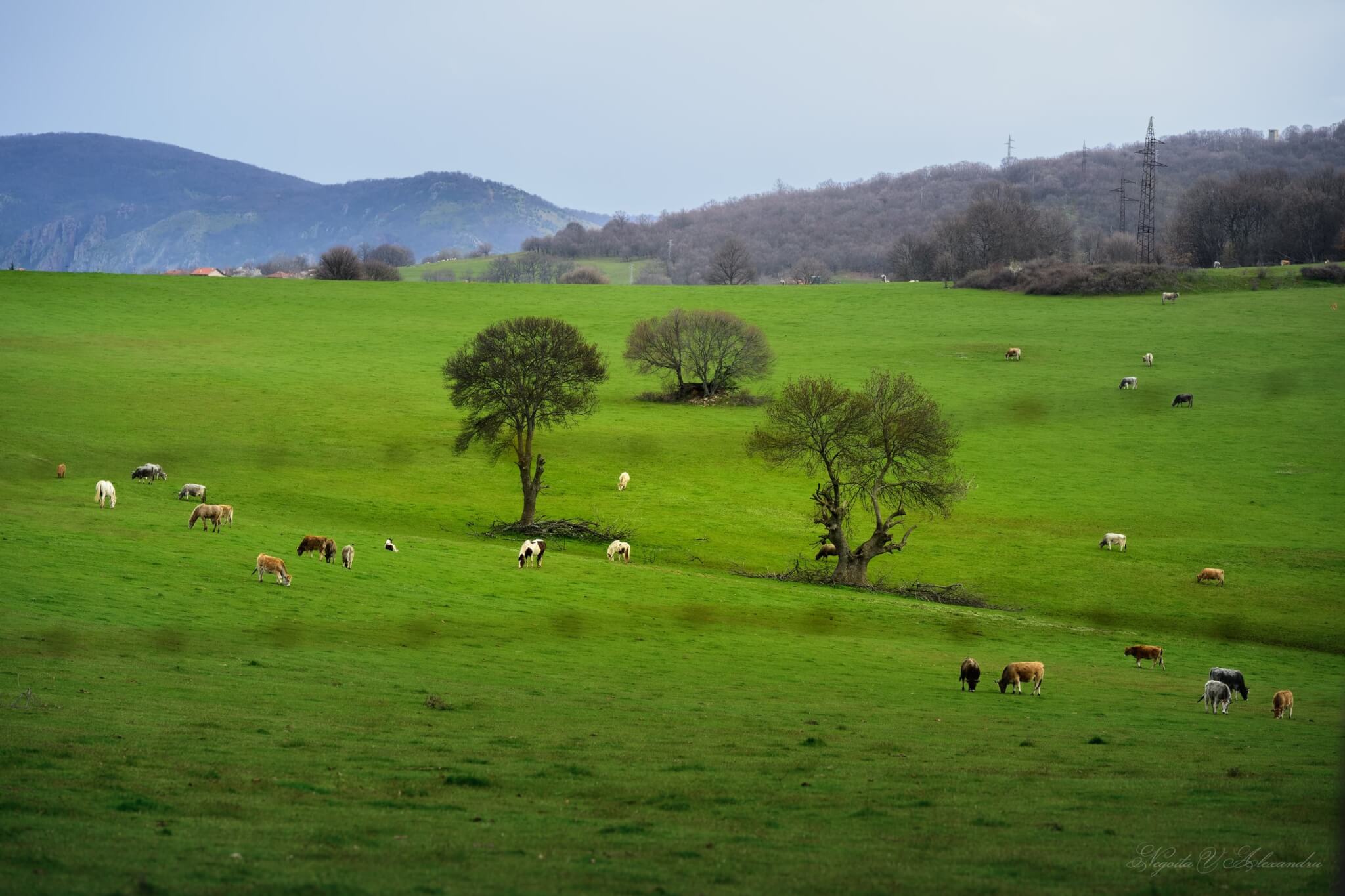
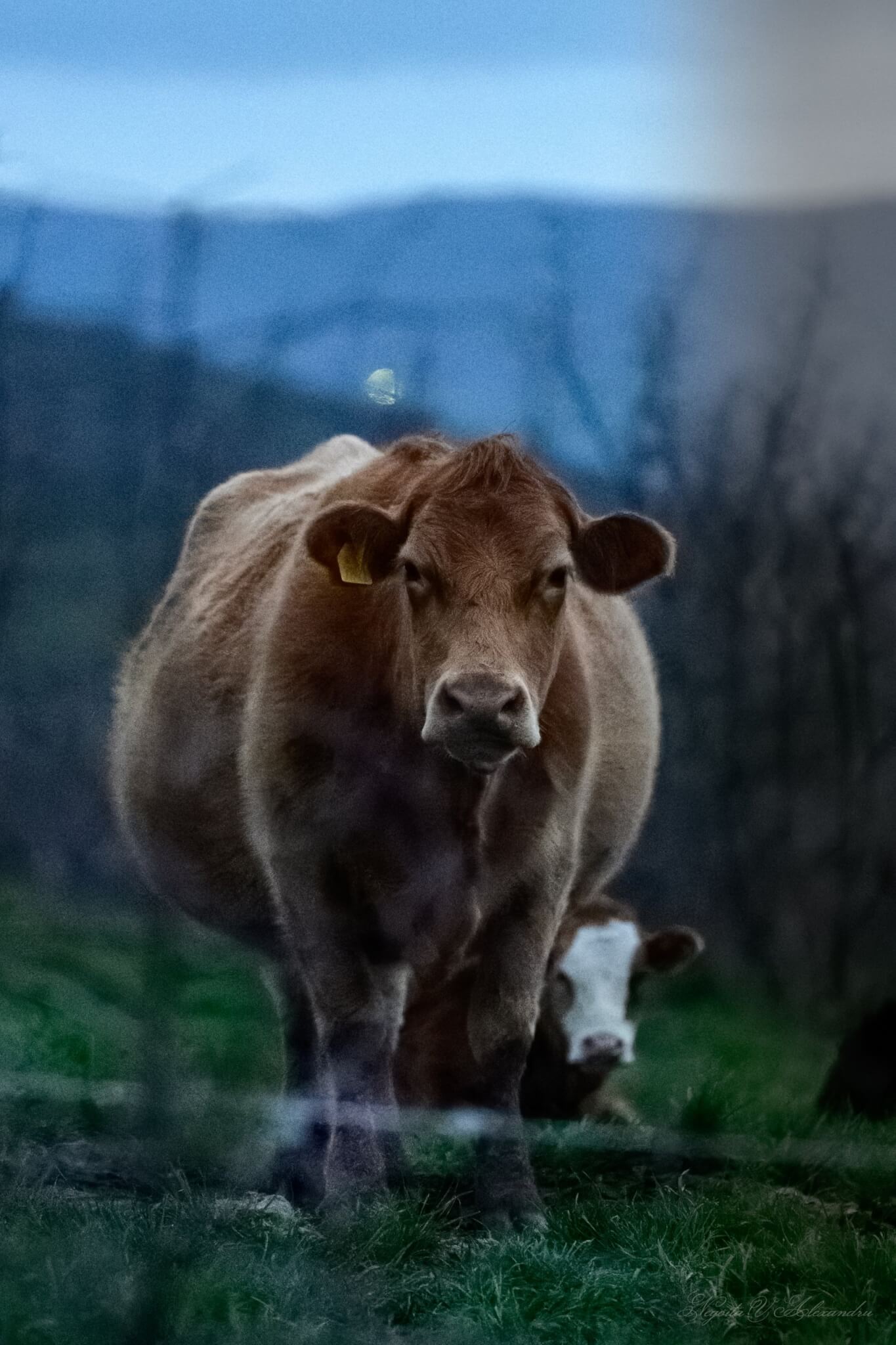
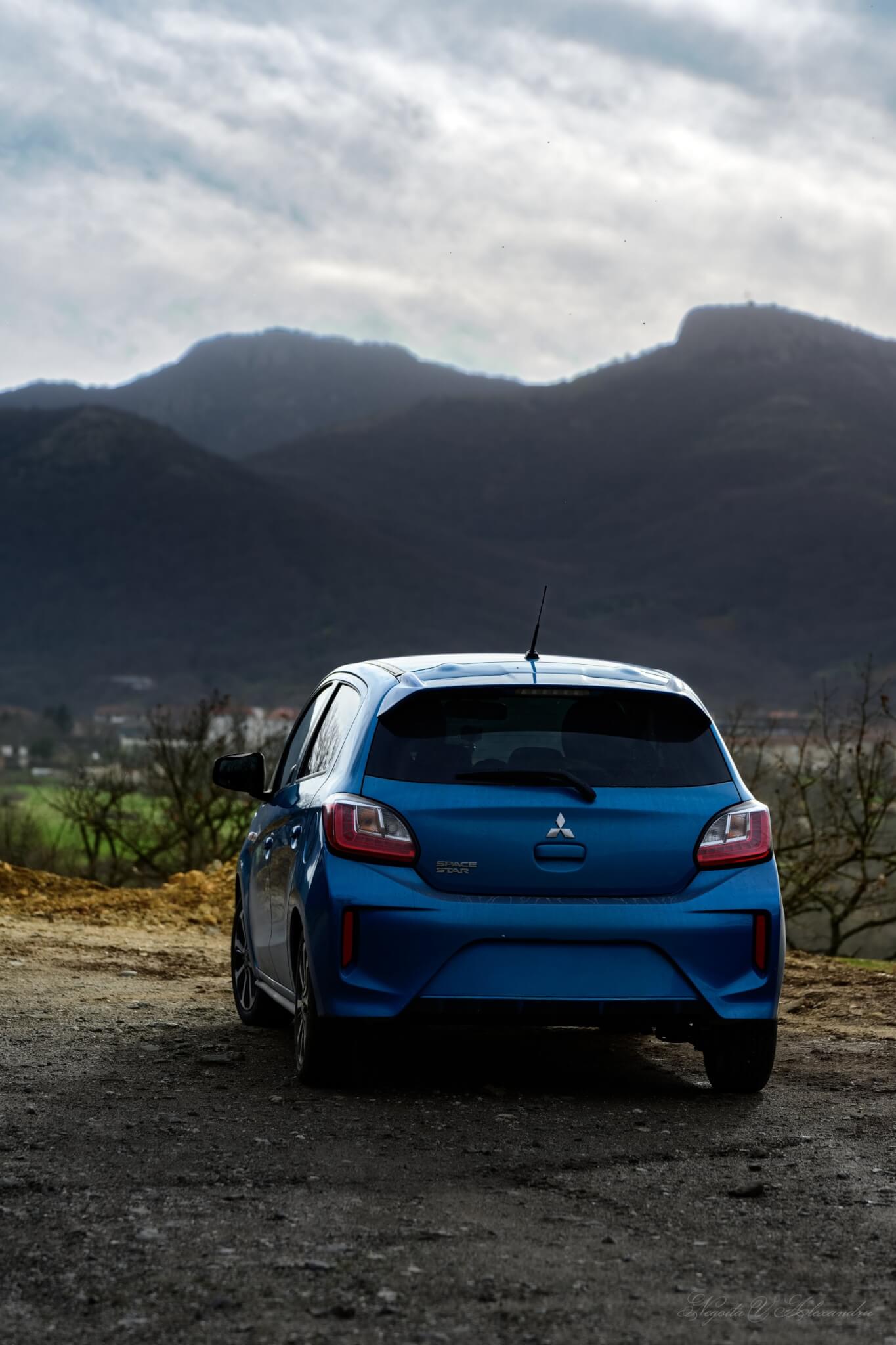
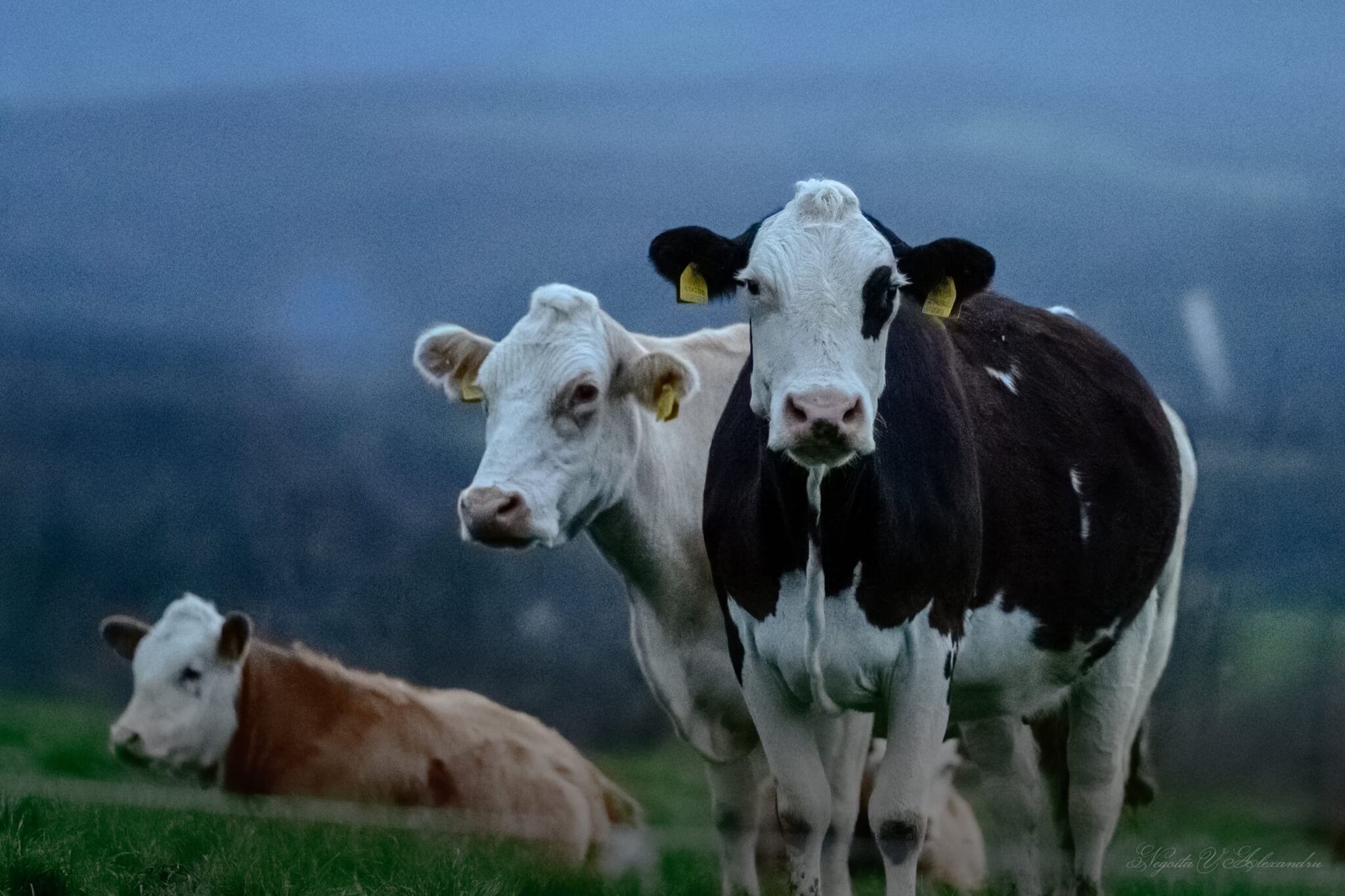
On the sides of the road entering the town, an authentic countryside feeling, like when I was a kid. Cows, horses, goats and other animals peacefully roaming, untouched by time — let alone by two owls and a tiny car.
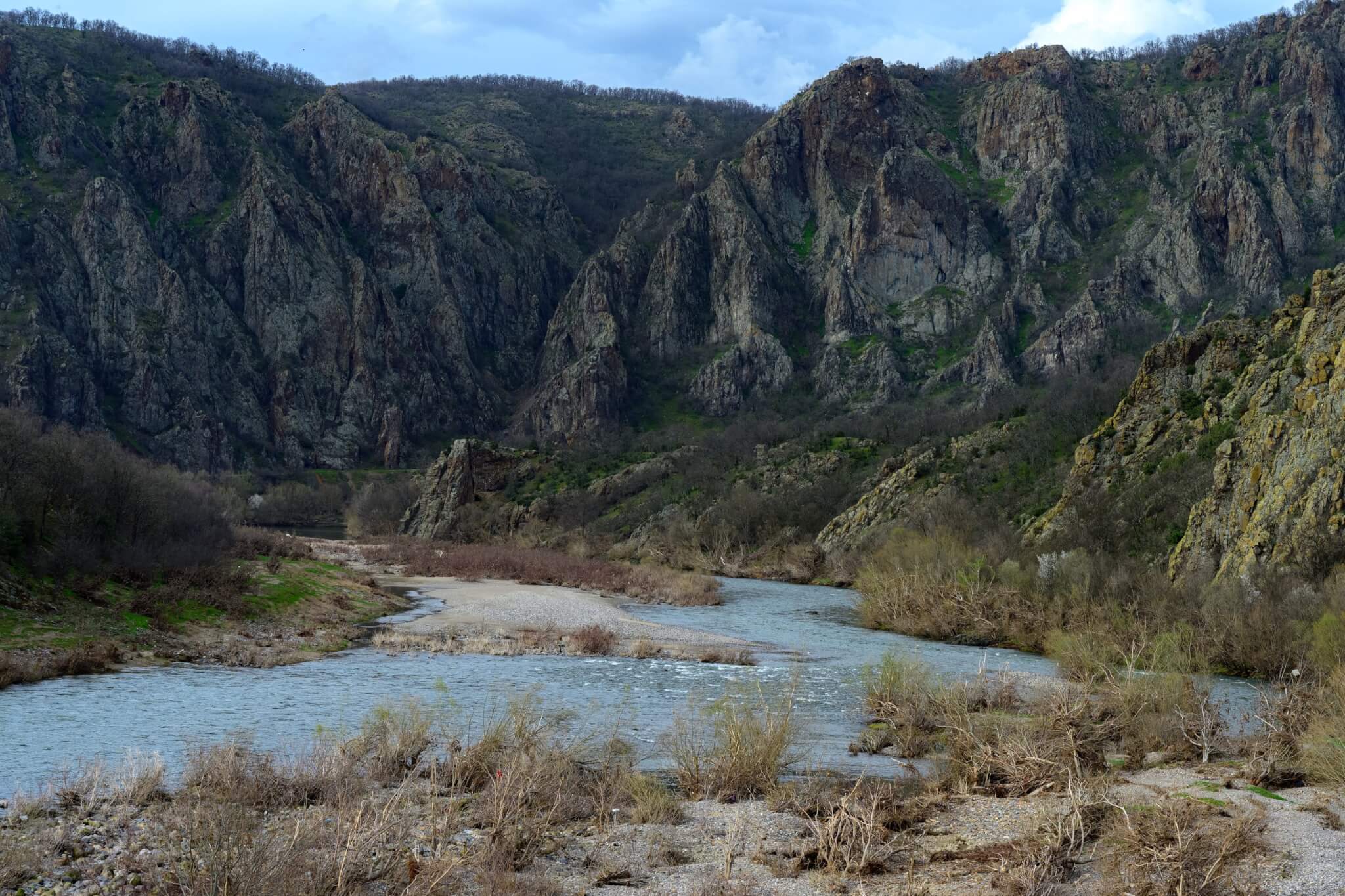
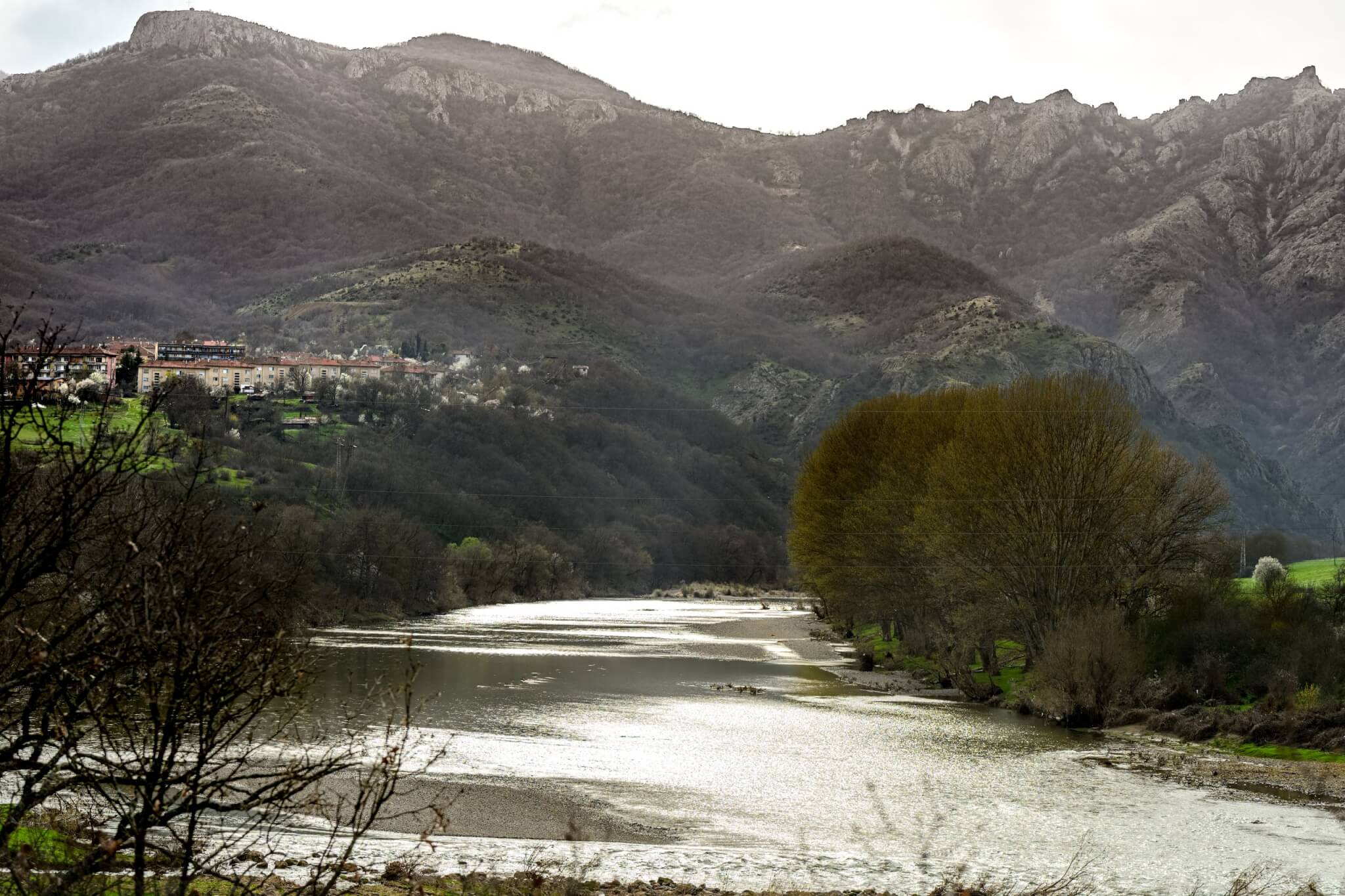
We enter Madzharovo and right at the entrance, I look up. In the sky — two vultures.
Big, calm, circling. Then I see two more. And two more. At that moment, the entire journey, all the calculations, all the emotions… disappear. It didn’t matter how we got there. Not even if we were leaving. They were there. And for the first time, they weren’t just in a photo from a course. They were real. And they were close.
And for the next day we finally had a clear promise: that we would truly see them.
In the evening, accommodation — solved mostly through gestures: in Madzharovo it seems only three people speak English — the guy on the phone, me, and my friend. After check-in — food. Starving, we try to order fries using the “point at what the girl at reception is eating” method — and it works.
Then we decided to go to the shop near the hotel to get something for the next day. We still had two other shopping options, but the other stores seemed either too far for that hour or suspiciously empty.
We arrive at the nearby shop, walk in and immediately: “Oh, my brother!”
I froze for a moment. I never had a brother, and my father was fully Romanian, from near the Danube… that side closer to Tulcea, not Bulgaria. At best, I could’ve been Lipovan, definitely not Bulgarian.
First thought: that’s it, we’re losing money here!
And I wasn’t far from the truth. My new Bulgarian “brother” warmly recommended all kinds of canned food, snacks and things “very good for the hide”. We bought them, of course — not because we needed everything… but because it was impossible to refuse a brother rediscovered after so many years.
The real experience
The next day, at 5:30 in the morning, we meet the man from the phone. Surprisingly, probably the most pleasant interaction I’ve had with a Bulgarian. Calm, with freshly made coffee in hand, just woken up, zero rush.
He came to pick us up with a 90s Mitsubishi 4×4, a car that doesn’t impress anyone… but takes you anywhere, and most importantly, brings you back. The car was basically his office on wheels. He had everything he needed to stay for days in the area. On the way, he explained the rules very clearly: what to do, what not to do, when to move, when not to breathe too loudly. In short: if we want good shots, we listen. If not… we can just sit quietly and enjoy the landscape. He also told us about the area.
And this is worth saying clearly: Madzharovo is not just “a place with vultures”. It’s a protected area, almost a sanctuary. Vultures come here year after year, from Africa, for breeding. It’s one of the few places in Europe where you can see this so closely.
I sat in the front. The car — right-hand drive. The road — narrow, muddy, full of bold rocks. The experience — like a rollercoaster without a seatbelt. At every bump, my body made decisions independent of my brain. My hand was gripping the handle, and my mind oscillated between “it’s fine” and “why are we doing this?!”. The Bulgarian… relaxed, sipping coffee and talking. And oddly enough, that helped: his calm cut through the tension.
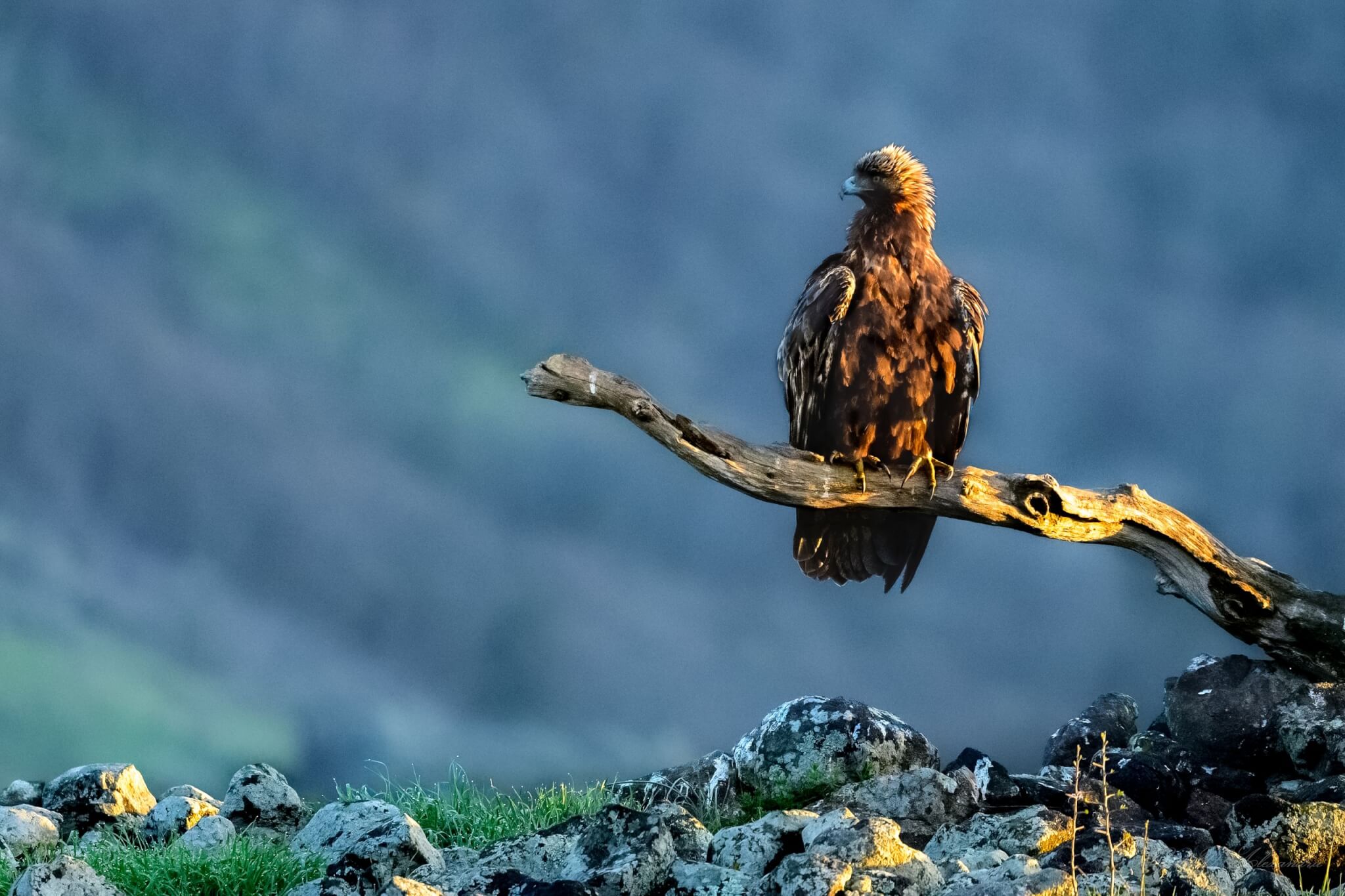
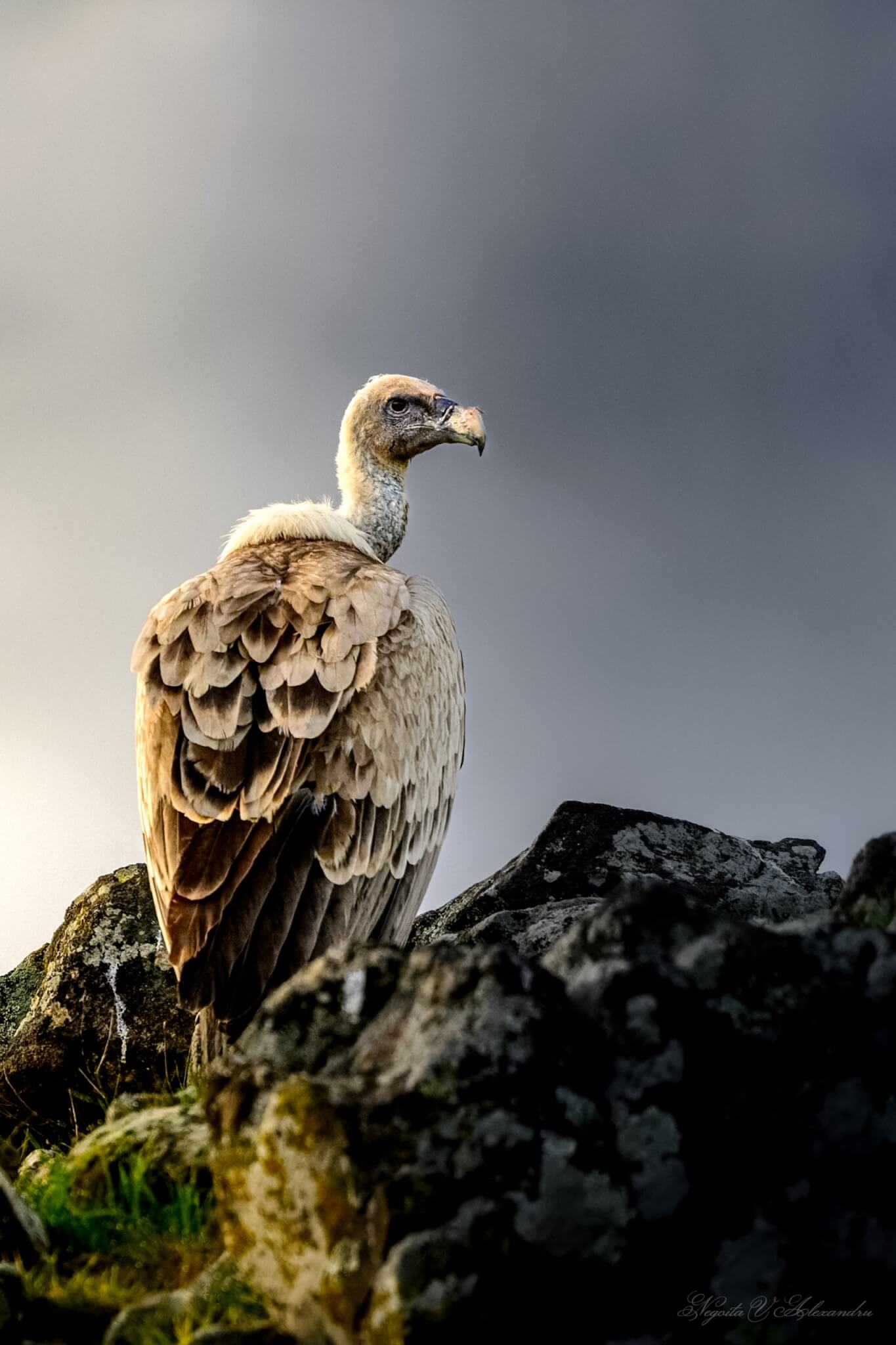
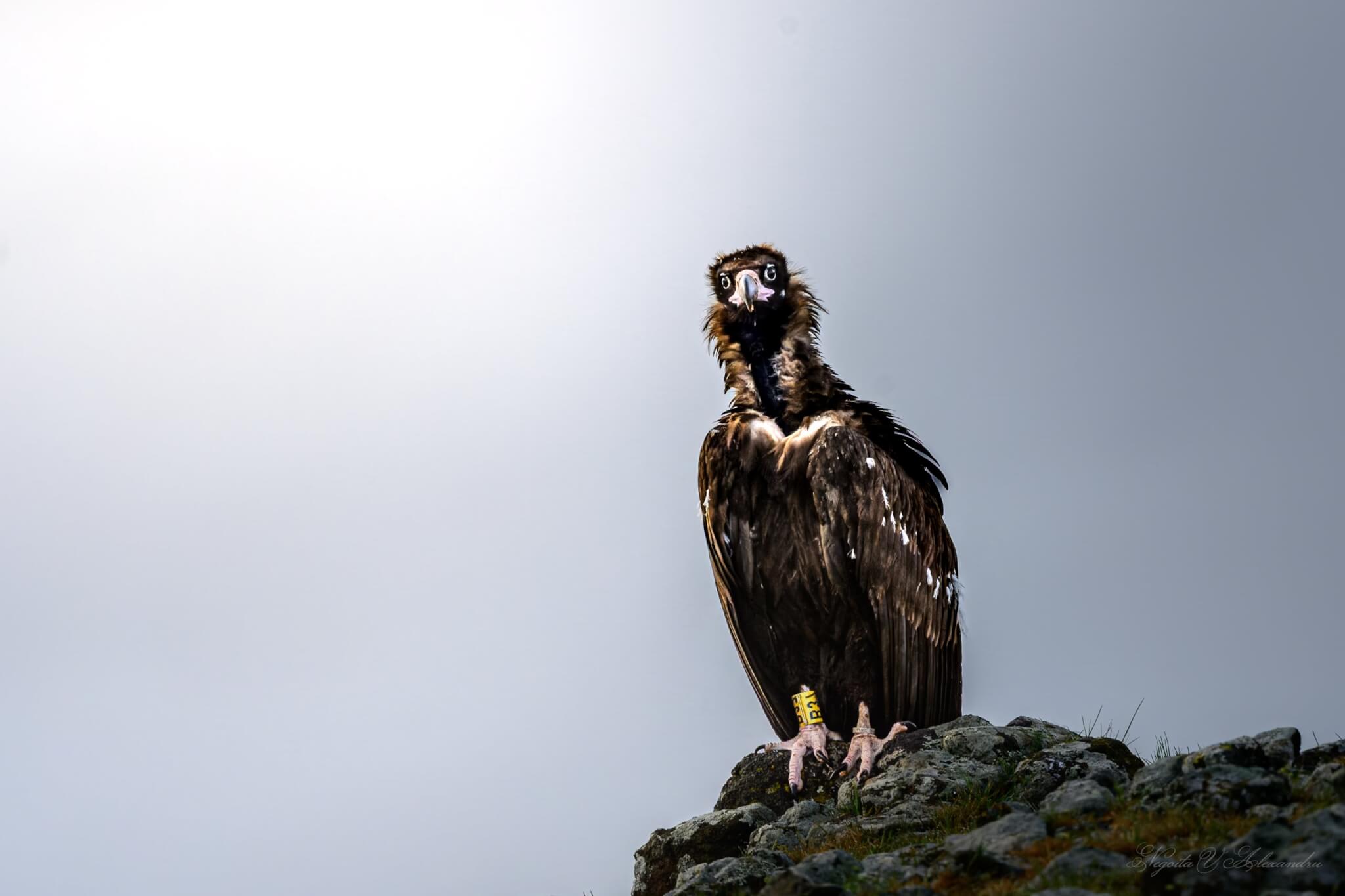
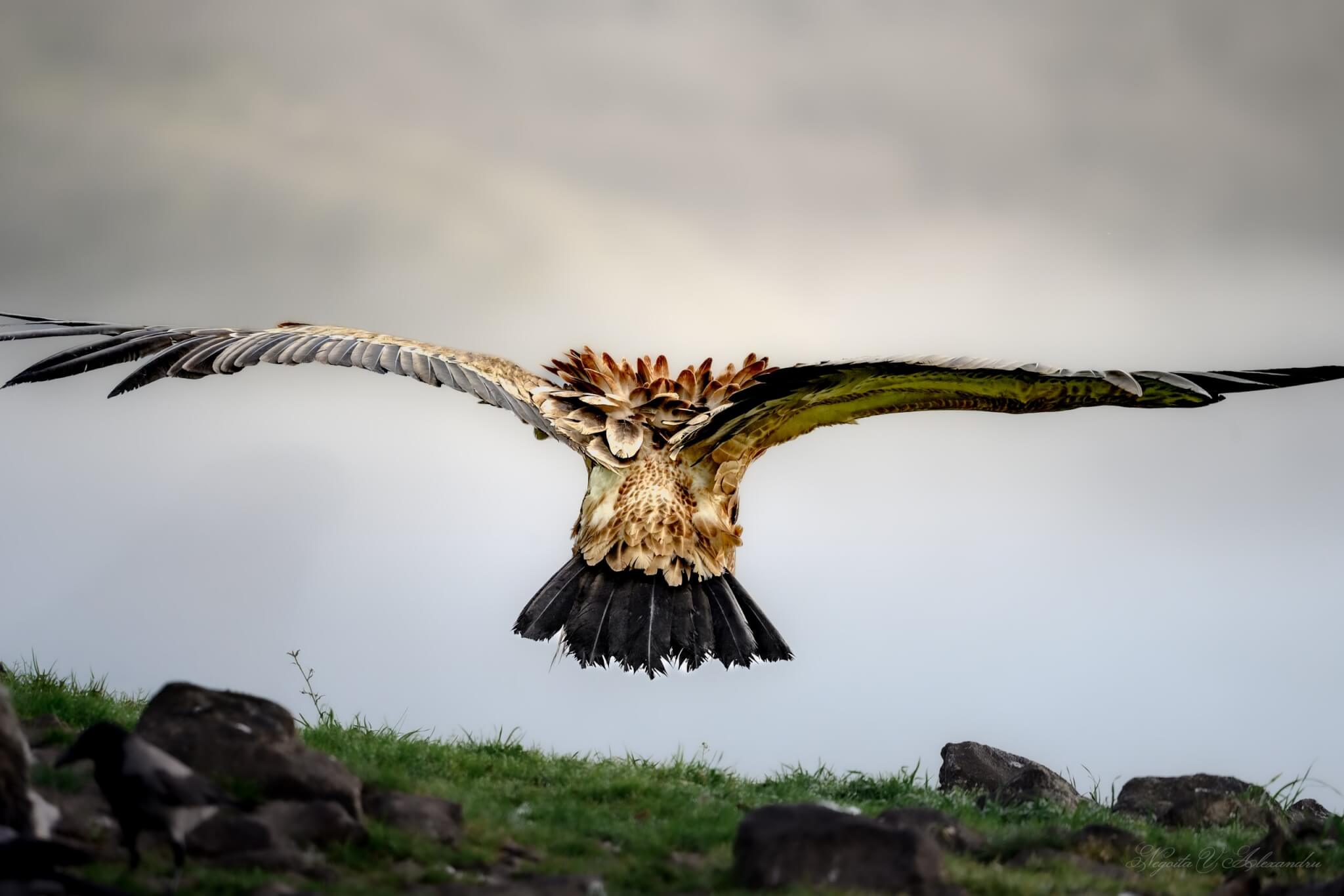
We arrive at the hide. Total silence. No introductions, no ceremony. Just silence. In that moment I realized something important: this is no longer a place for talking. My friend is the kind of person who always has something to say. And honestly, most of the time he’s worth listening to. But here it was a different game. This is where patience begins. This is where silence begins. And without realizing it, I stepped into a space that felt familiar. That place where I can sit still for hours, stare out the window, talk to myself in my head, build scenarios: how the first vulture will come, where the light will fall, whether they’ll fight, whether I’ll catch the moment or be left only with the memory. Outside it was quiet. But in my head, the show had already started.
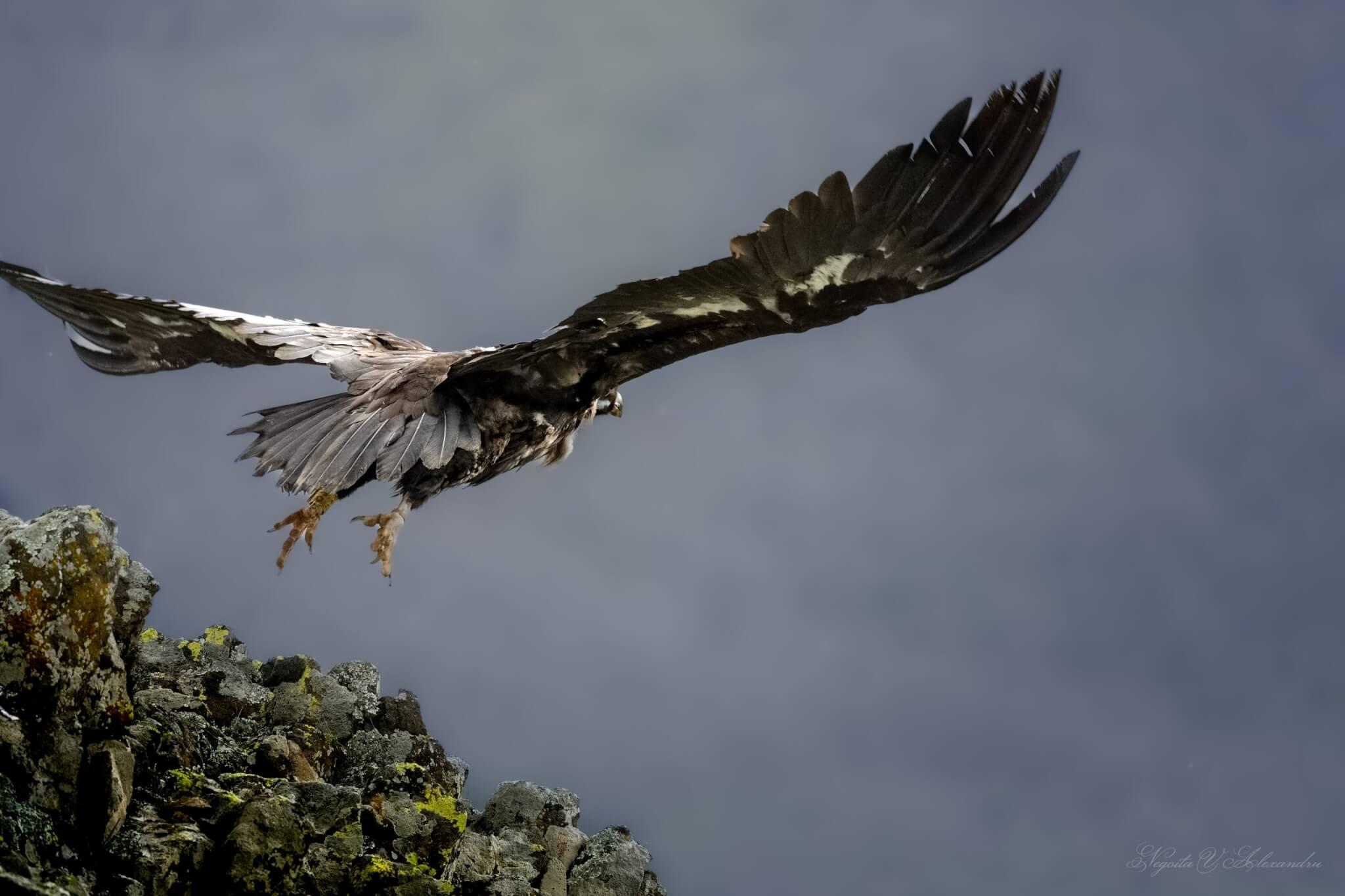
Click! The first photo of the eagle. I don’t want to miss the opportunity, especially now that it’s clear. Click! Click! More photos. I start to feel like I have control, like I’m actually getting something out of what I’ve done so far. And then the first griffon vulture appears.
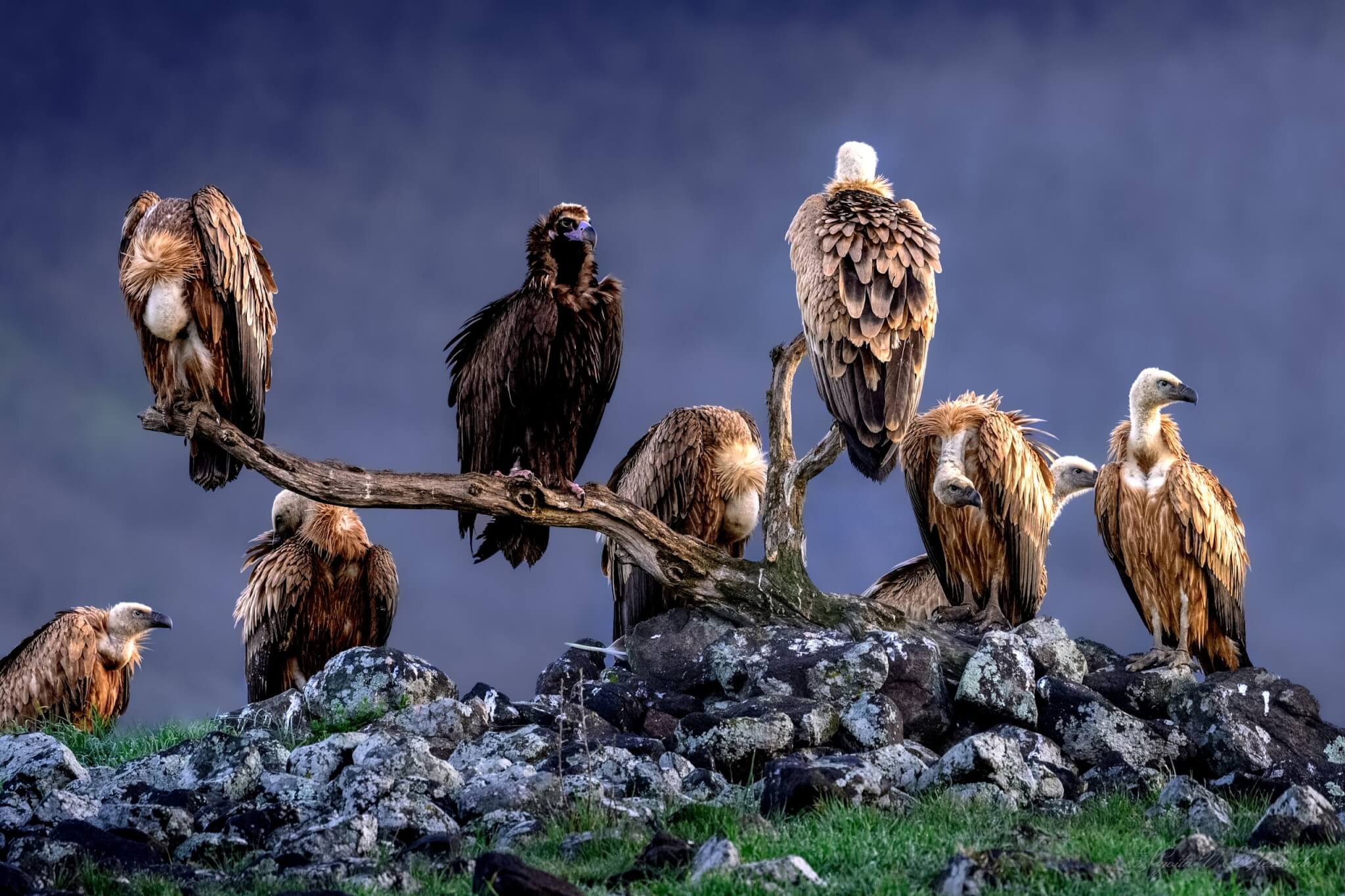
Total silence. My friend wants to say something. I signal to him, he stops. We both freeze. The griffon stands, analyzes, waits. A few more appear. They settle on the rocks, at a distance. This is no longer photography, it’s chess…
Suddenly, a few griffons take off abruptly. In my head: that’s it, we ruined everything. Who moved? Did you move? Me? Did I speak too loudly? Did I breathe too deeply?
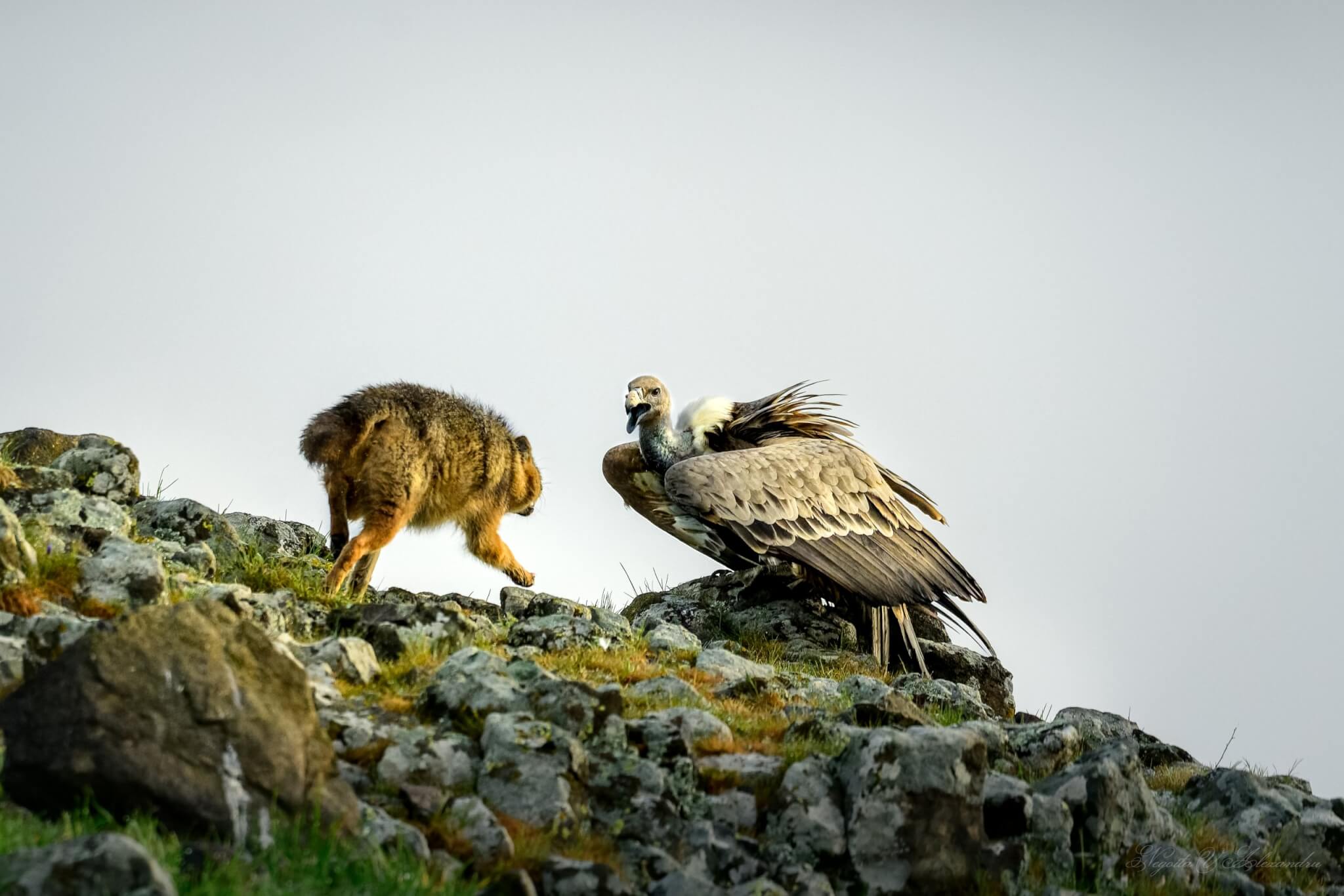
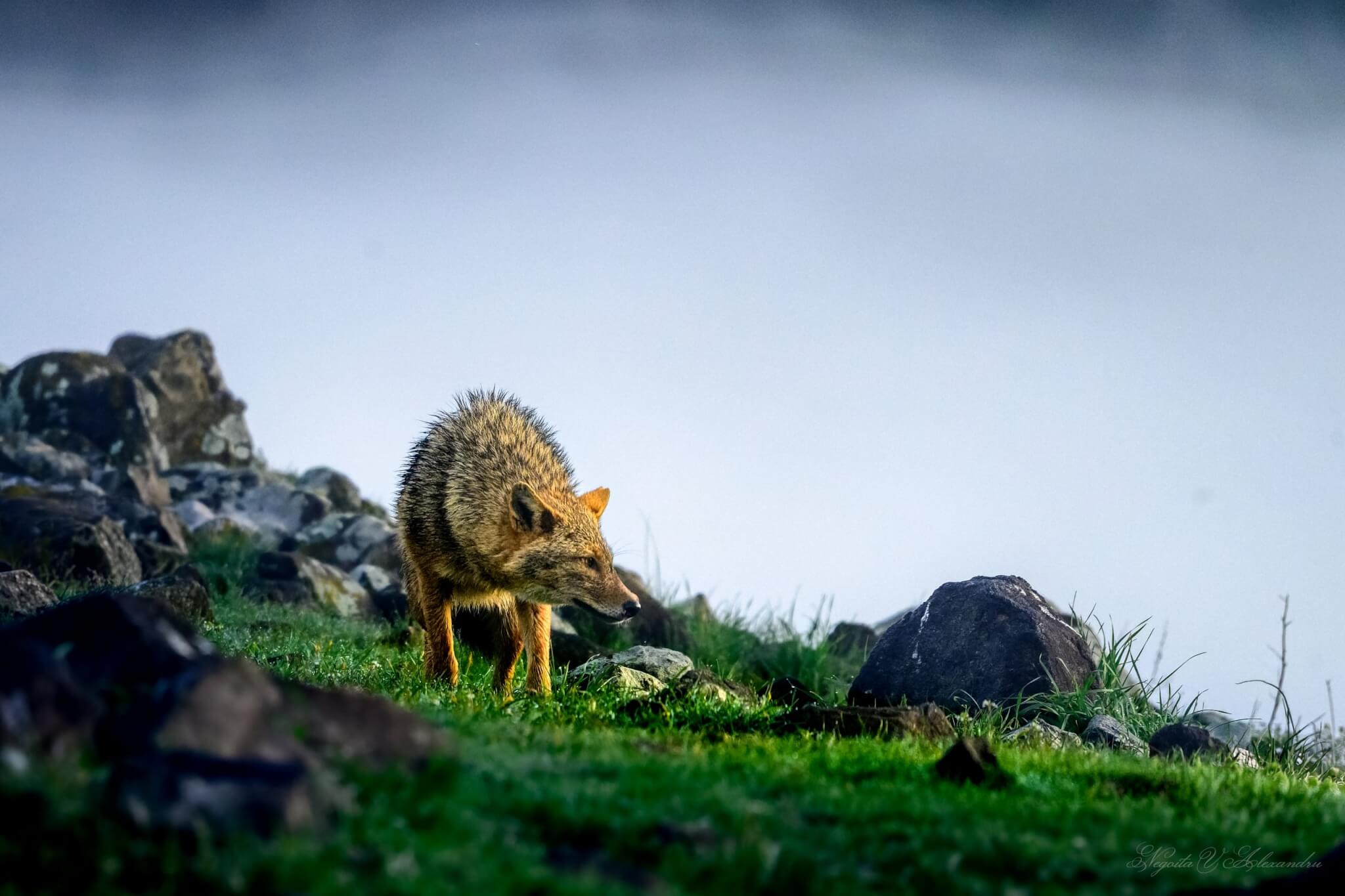
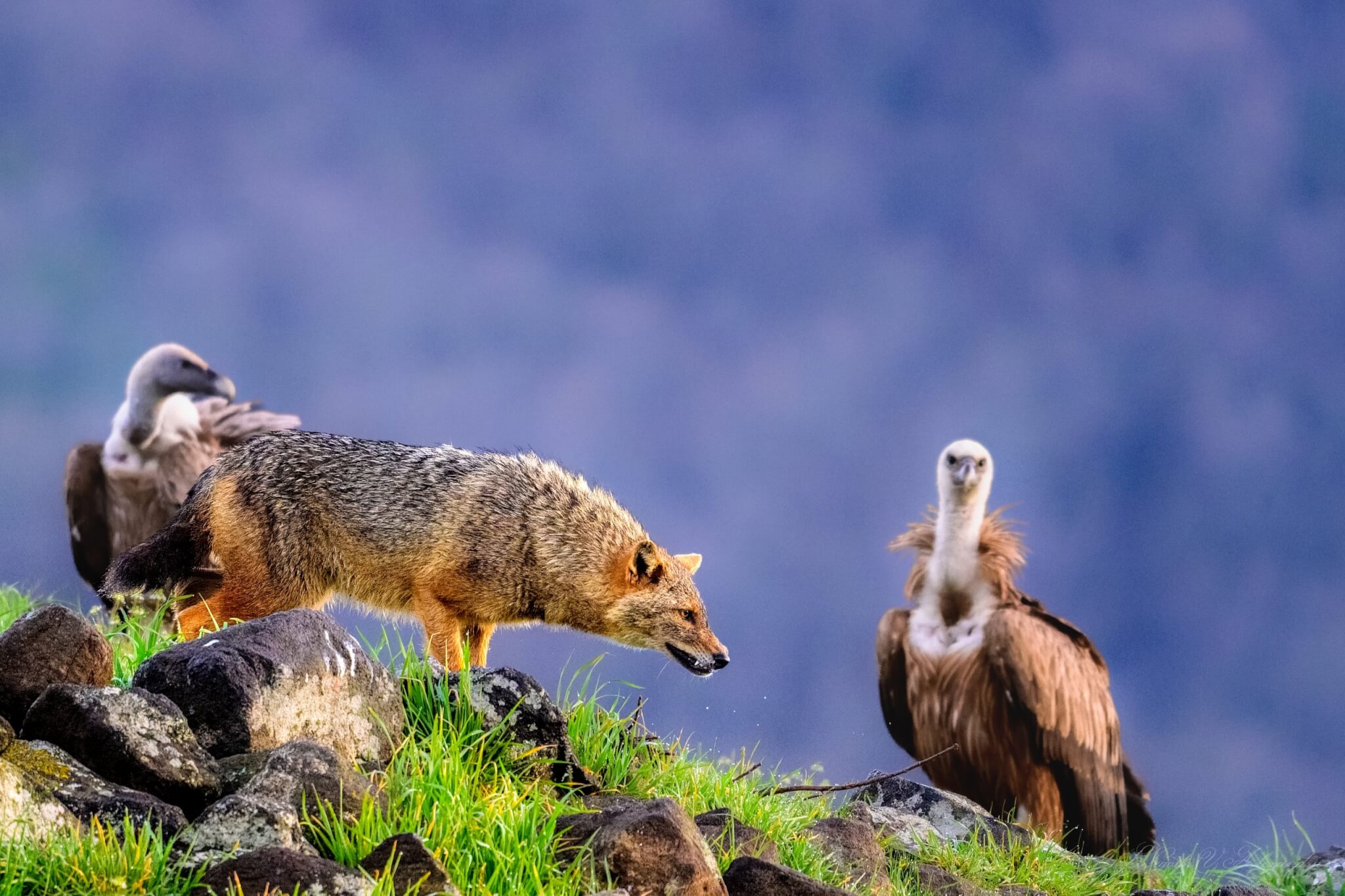
No! The truth comes out of the bushes. Drawn by the smell, a curious jackal came to see what the chef is preparing on this beautiful day. It enters the scene uninvited, bold, hungry.
The griffons retreat, circle in the air, then return. The jackal circles around. It tries to reach the piece of meat in the tree, near the eagle. The sheep (what’s left of it) is further away, near the vultures, but the temptation is strong. For a few minutes, it seems like he’s running the game. Then he realizes where he walked into: one jackal, alone, among 7–8 griffons, two black vultures and an eagle… not the ideal combination. He leaves… Probably to bring some friends.
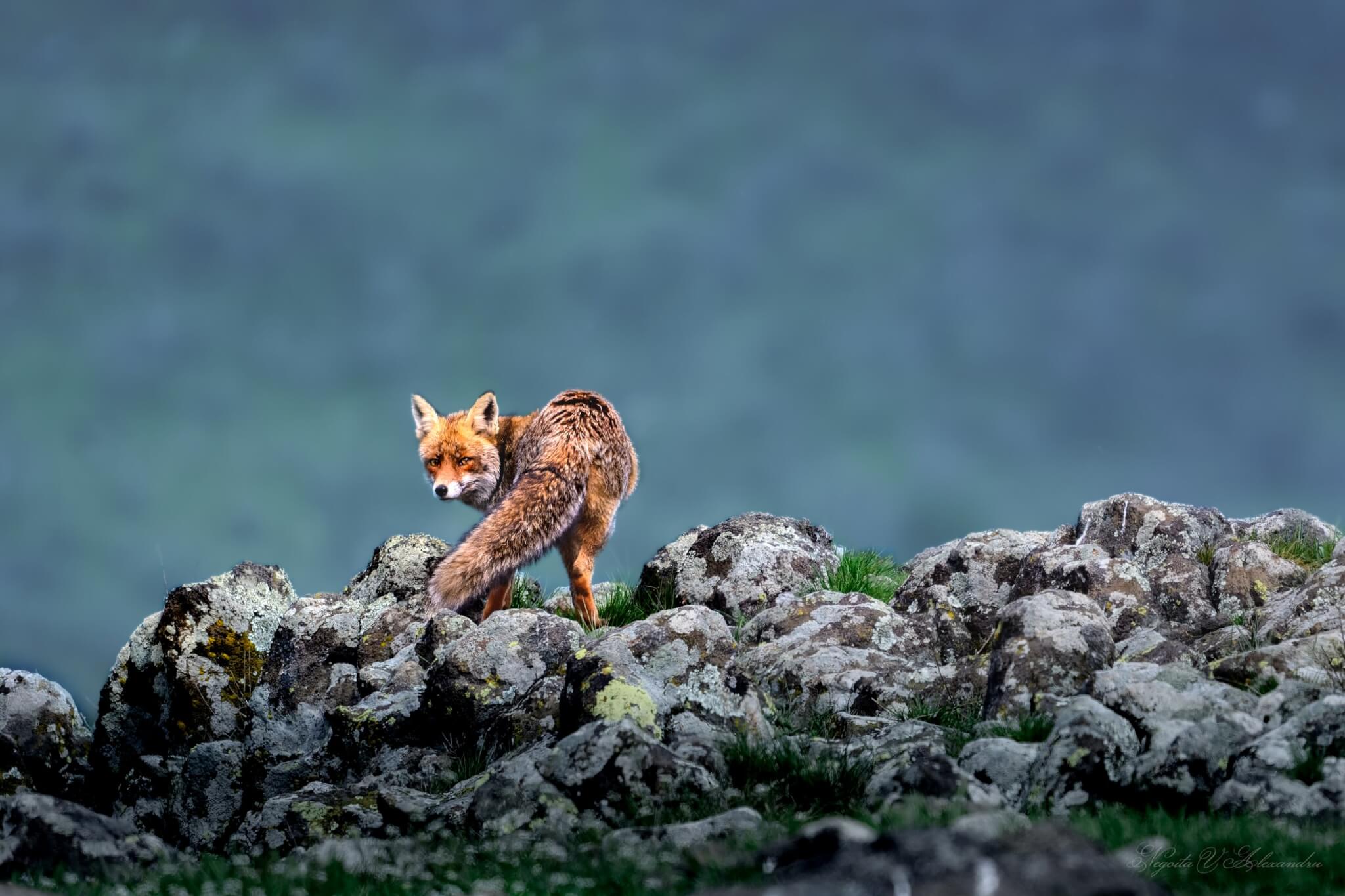
Not long after, a fox appears as well. Smaller, more cautious, much more calculated. It approaches, analyzes, steals a bit, stays for a few moments. I manage to take a few shots. Then it disappears, quickly, as if it had never been there. The eagle leaves as well. The griffons and the black vultures remain. One griffon approaches the sheep and timidly begins to feast. The others are still waiting. They want to see if their friend will manage to eat or be eaten. One by one, they lift off from the ground, circle around, then slowly begin to approach. Now there are two eating. Then three, four, seven! And the feast begins! With all kinds of sounds, like a party that’s been going on for three days and three nights.
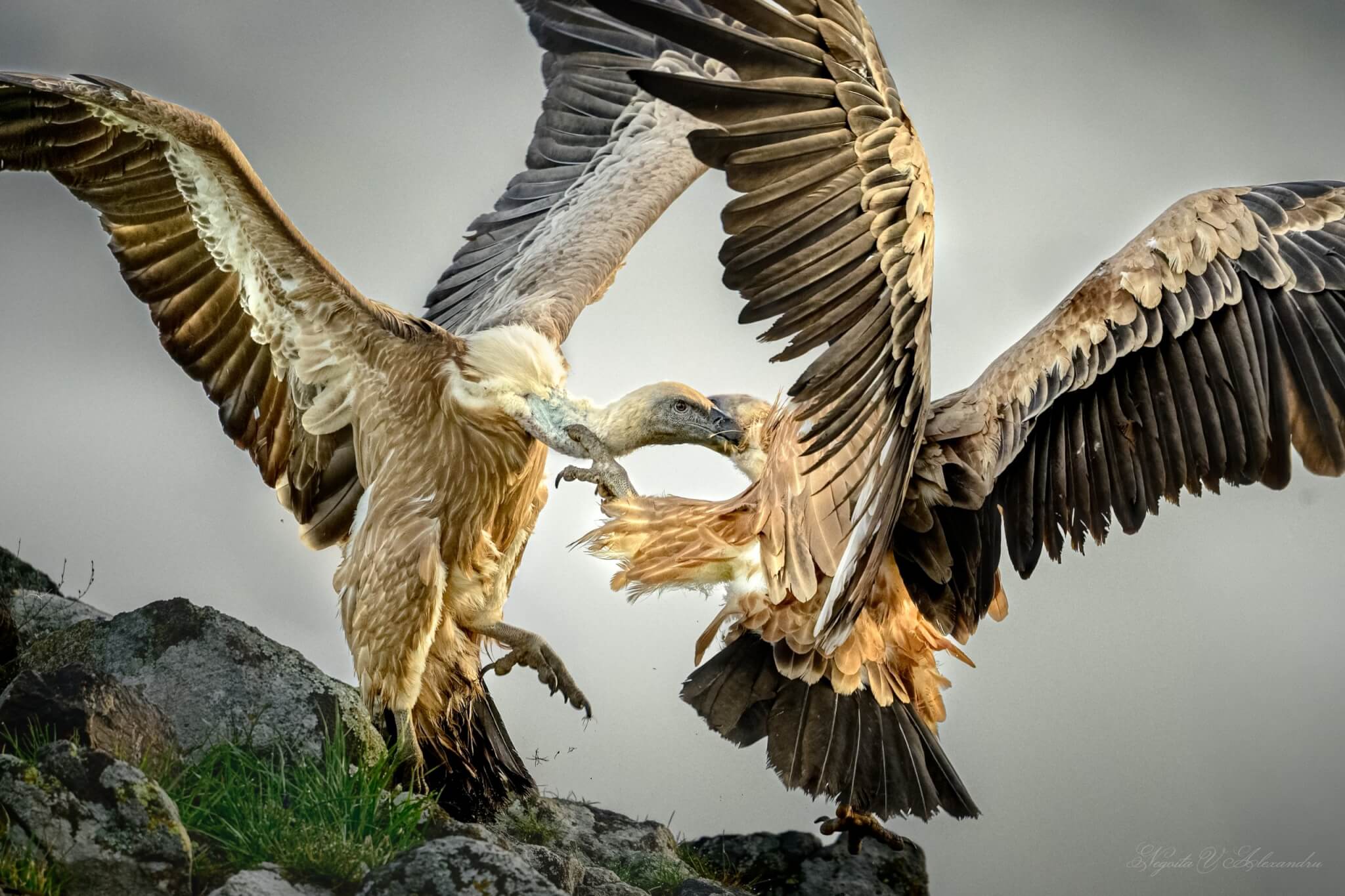
One griffon gets angry and attacks another. It spreads its wings. Jumps! The other falls, screams! The one above stays for a few seconds with its wings wide open, head held high. A moment where it seems to say: “see? that’s how it’s done, I’m the best!”. Then it lets go and dives straight into the prey.
As we were to find out later, the rule is simple: the hungriest ones enter the feast first. In case they arrive later, they make their way through this kind of fight. The rest… wait for the right moment to attack or (the younger ones) learn.
For almost three hours, the show doesn’t stop. Attacks, retreats, pushing, screams!
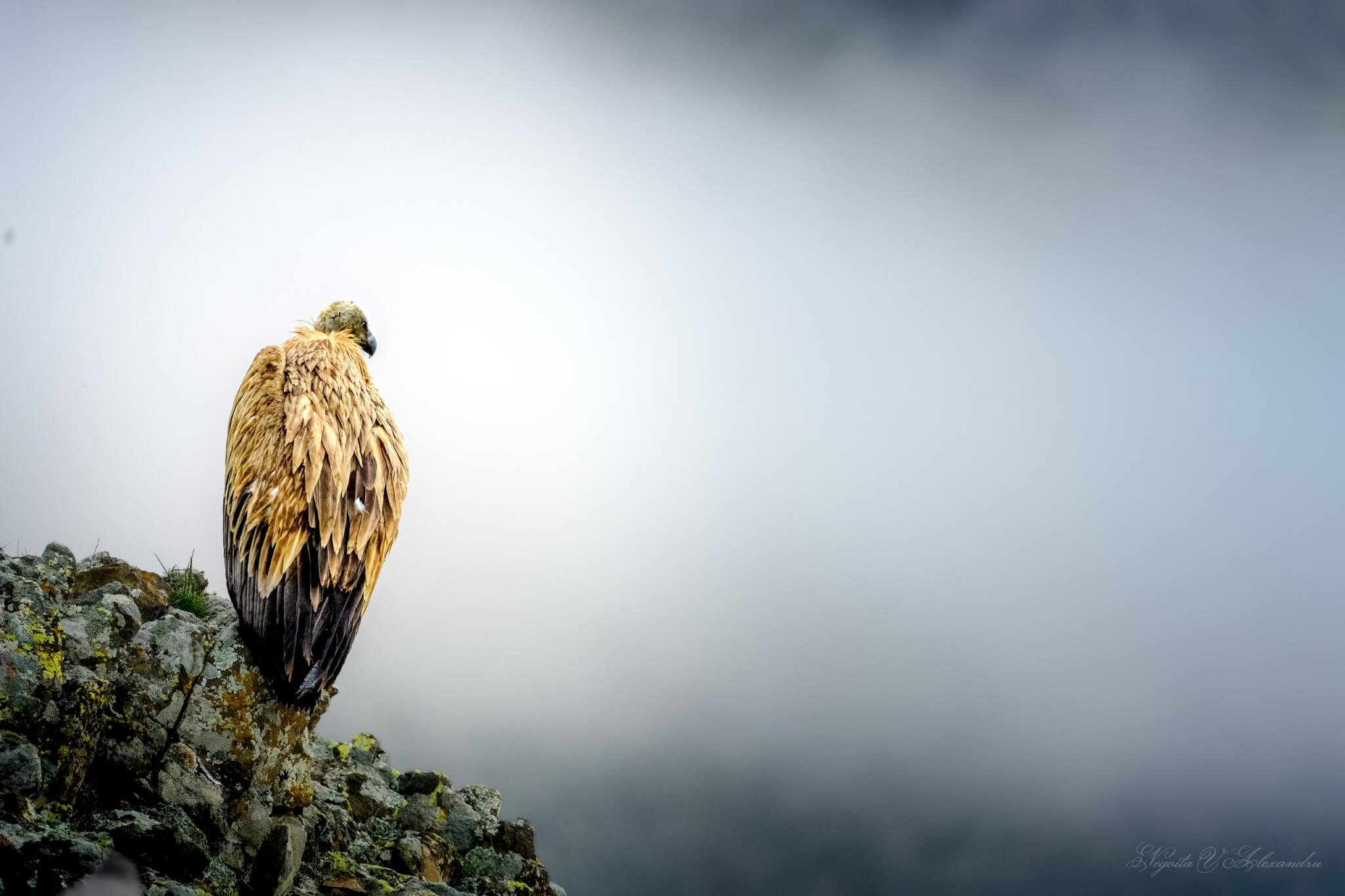
When they’re not eating, they sit on the mountain ridge, analyze, wait or stretch their wings, drying them, like after a serious day of work.
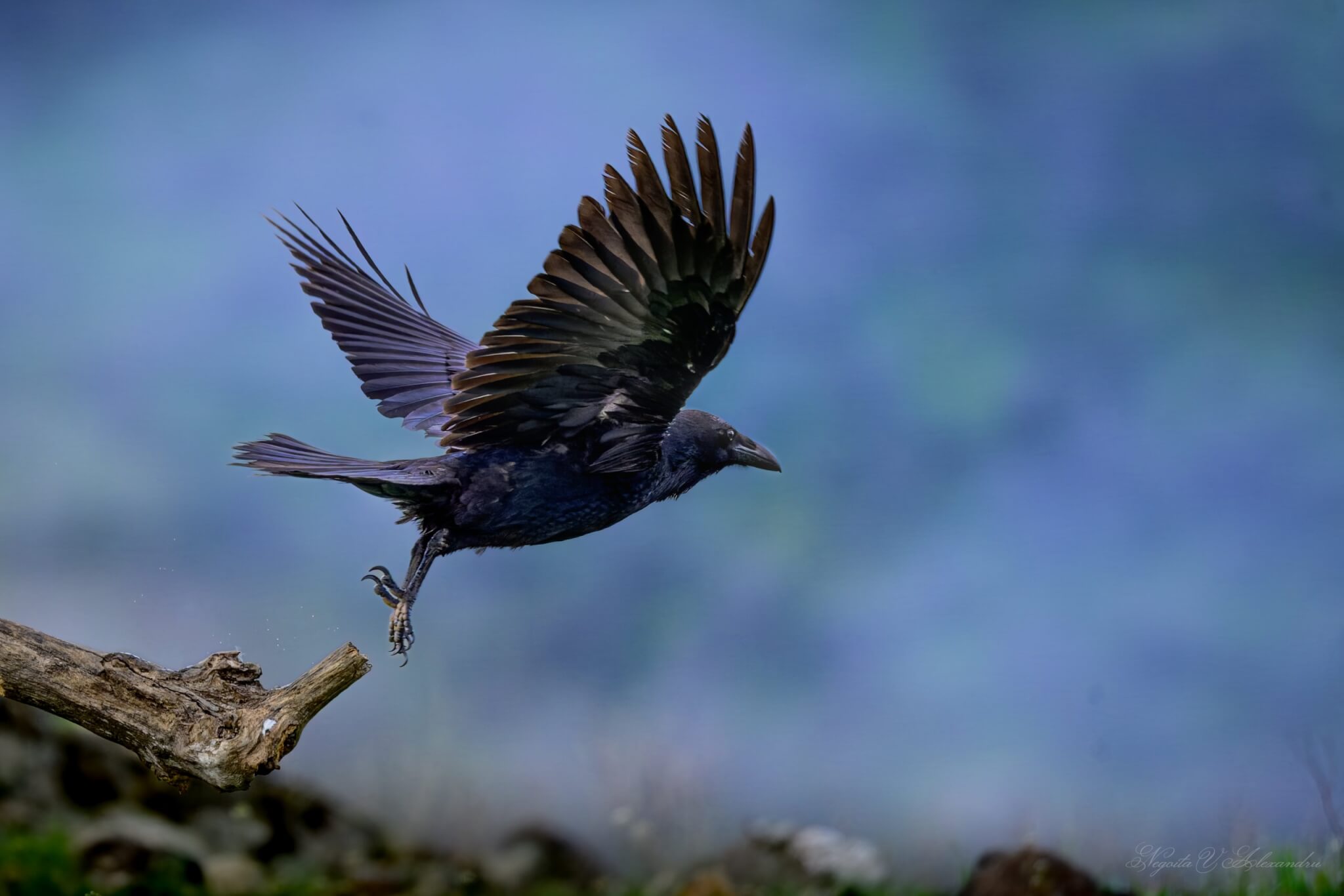
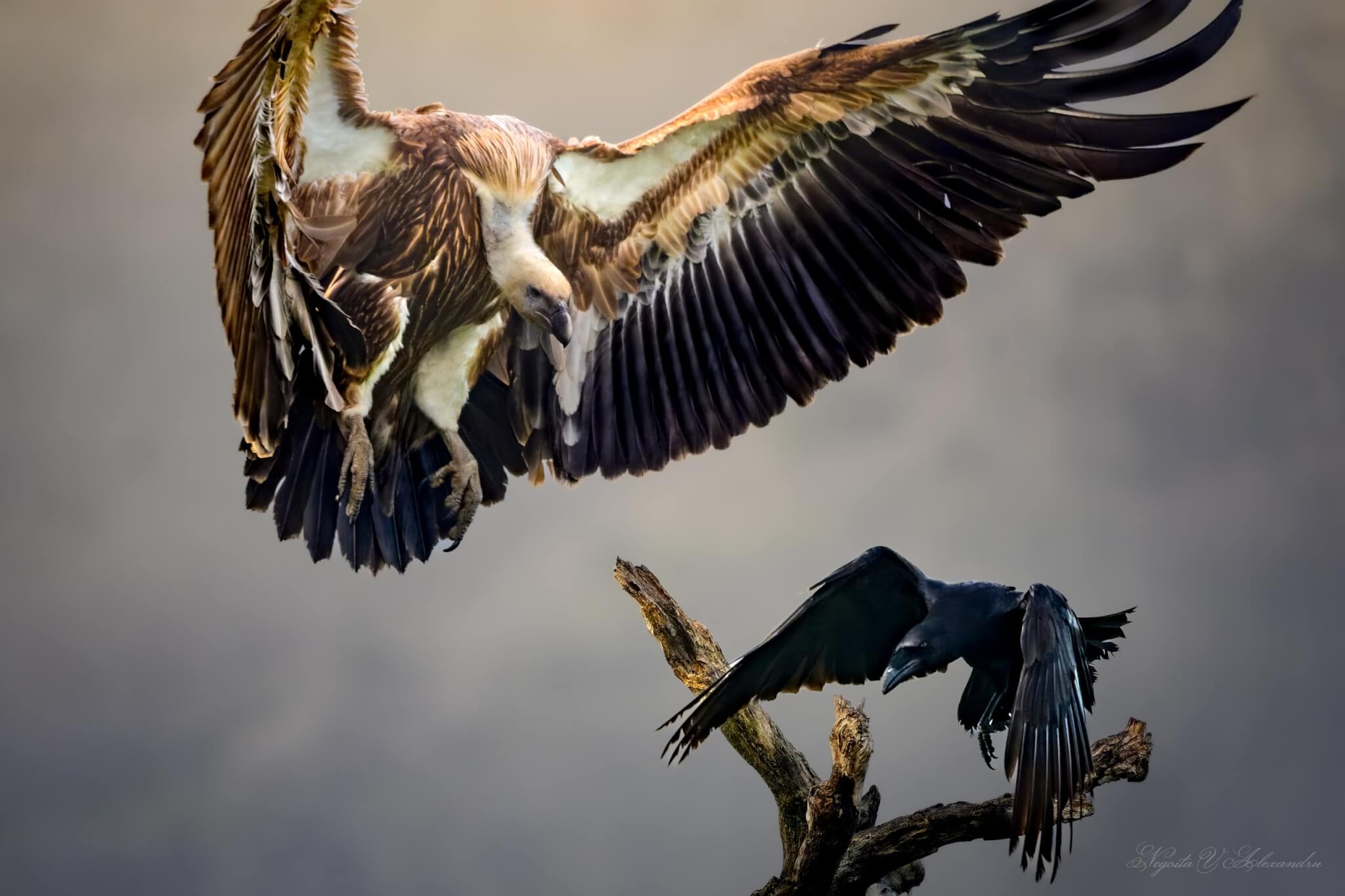
In all this organized chaos, the opportunists appear as well: crows and ravens. They come in, steal, leave — fast, efficient and without shame.
At some point, around noon, the pace starts to slow down. We already have hundreds of good shots. And slowly, the vultures start to leave, one by one. First, the griffons begin to leave. They circle a few times above the hide, as if in a sign of gratitude for such a feast, then, in groups of two or three pairs, they slowly drift away. Then, the last black vulture leaves as well. In a way, it came first and it’s also the one closing the bar. It comes back once more, as if it had forgotten the last bite on the plate and it’s too annoyed to leave it behind. It swallows a bone, then stretches its wings and disappears into the horizon.
We remain in the hide. We look at each other. And we both understand the same thing: this is where the hard part begins — waiting. Because the rule is simple: if you want animals to come, they must not feel that you were there. No smell. No noise. No movement. Nothing! Especially if you’re hoping for something rarer… maybe even wolves. So we do what we can: we play cards, we sleep a bit (on some improvised beds, but surprisingly okay), we sort through photos. At one point, the fox from earlier decides to pass by once more, maybe there’s something left for it. It doesn’t really find anything and leaves just as it came.
The weather is on our side… until it isn’t. Morning — perfect. Good light, a bit of fog rising from the valley, dream-like atmosphere. After noon — rain. Showers. Lightning. Hail. Small for us. Lower down, as we later found out, serious chunks, as big as a cherry. The roads had turned into rivers.
The wolves didn’t show up. But honestly, it didn’t even matter anymore. We already had everything we came looking for. We left with strong memories and a lot of photographs.
My friend also left with a few bumps — the hide was quite low, and for someone who doesn’t stay still for too long, the beams become… invisible.
We leave the location right after sunset, with the same car and the same enthusiasm we arrived with. Only now it felt different. It wasn’t that initial excitement mixed with uncertainty anymore. It was that kind of quiet satisfaction, where you know it was worth it.
A small bump
I couldn’t wait to get home and open the first shots. Not because I expected perfection, but because I knew the entire experience was in them. But until then… we still had one more night in Madzharovo, with my new “brother” from the shop, a hotel that in the meantime seemed determined not to kill me until morning, and another 600 km of road. On the way, we make what seemed like a good decision: “Let’s eat in Veliko Târnovo.”
It sounded good. It seemed logical. It wasn’t. We parked. Didn’t read the signs. Ate peacefully. When we came back… silence. The car was gone.
We had parked in a hotel parking lot, and the hotel staff had called the local police. The car — towed. No phone call, no warning, nothing, even though our number was in the window and it was obvious we were tourists.
The fine? About as much as the entire meal we had just finished. The kind of trip ending that brings you back down to earth a bit.
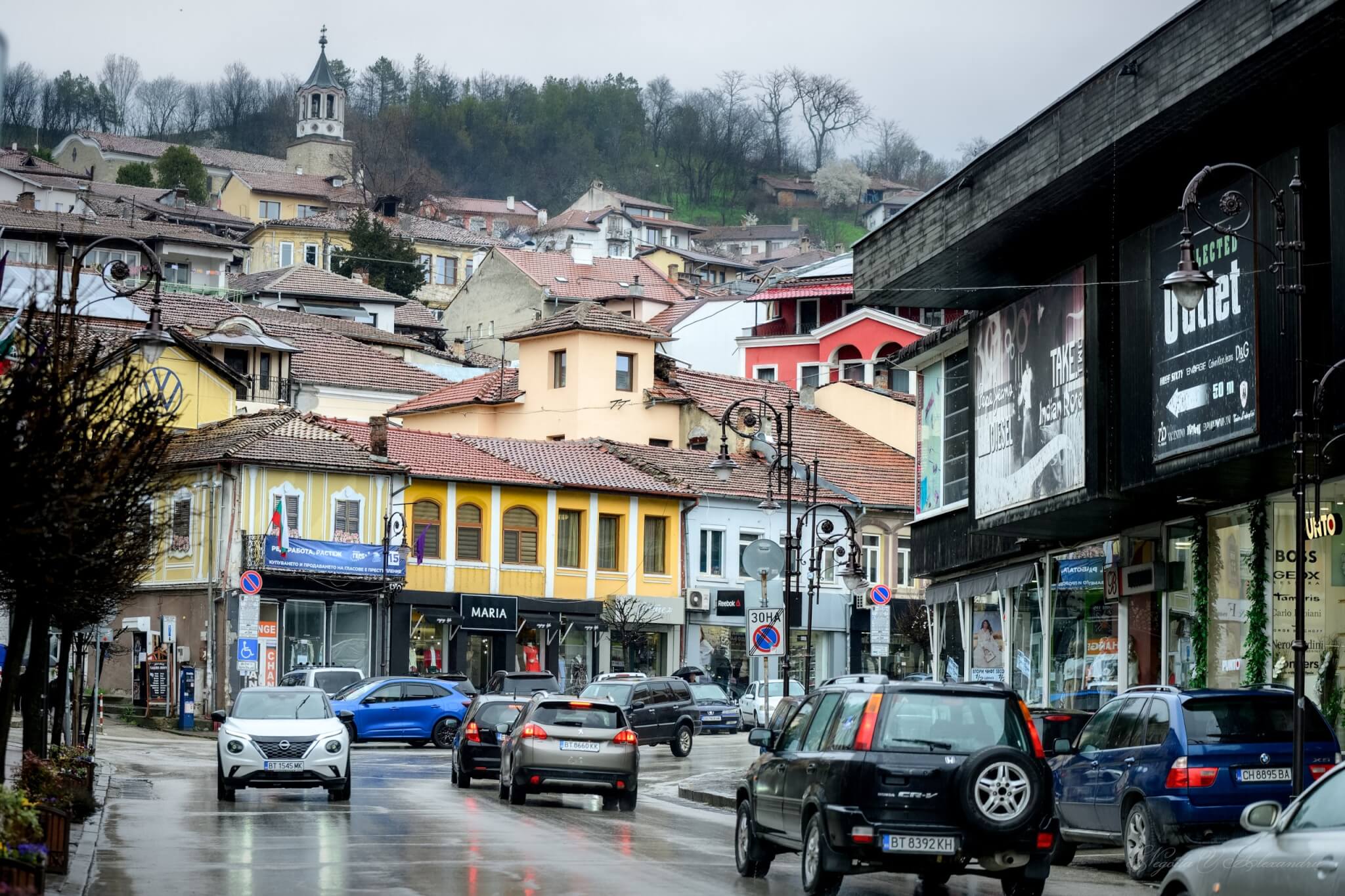
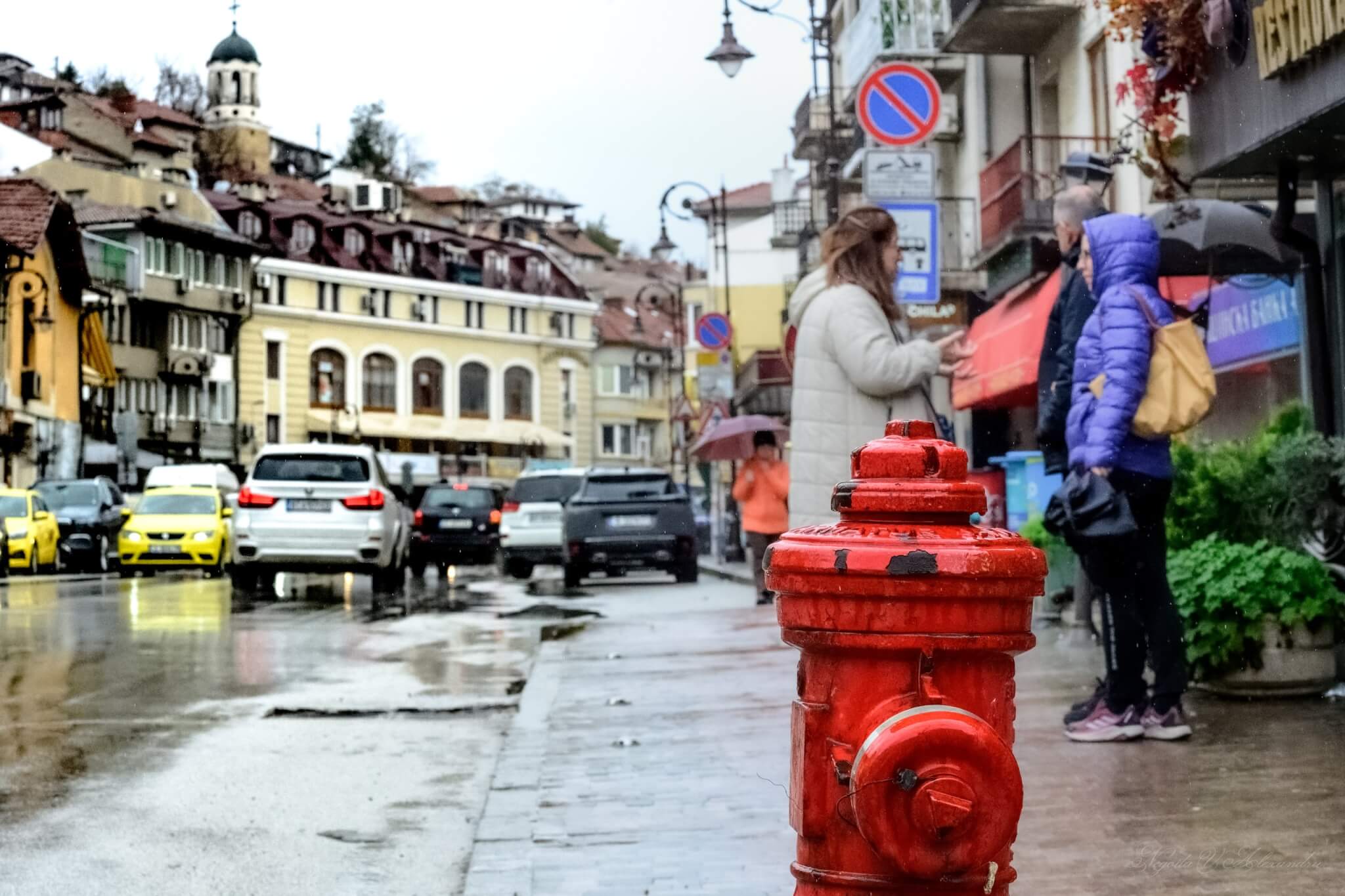
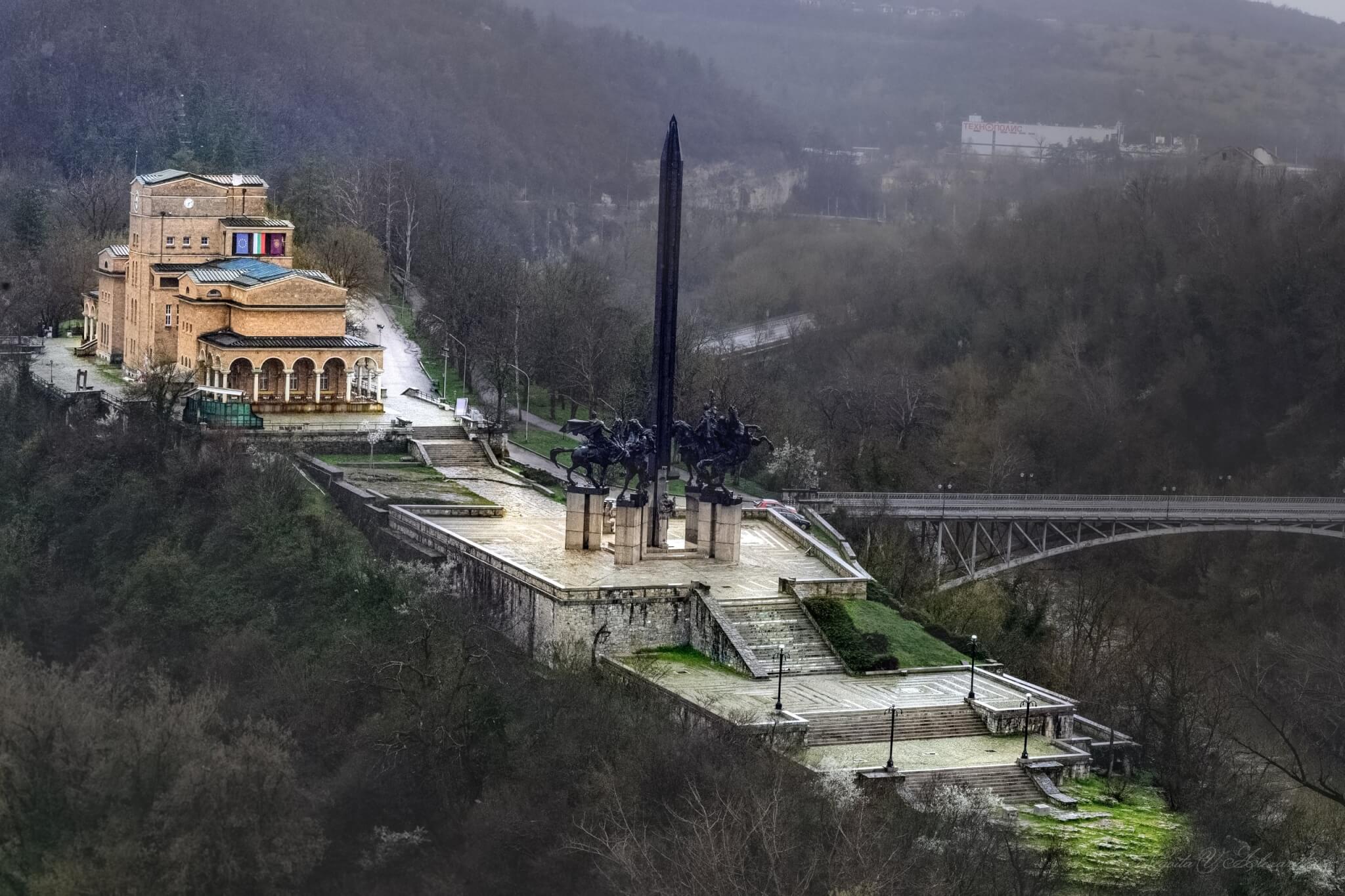
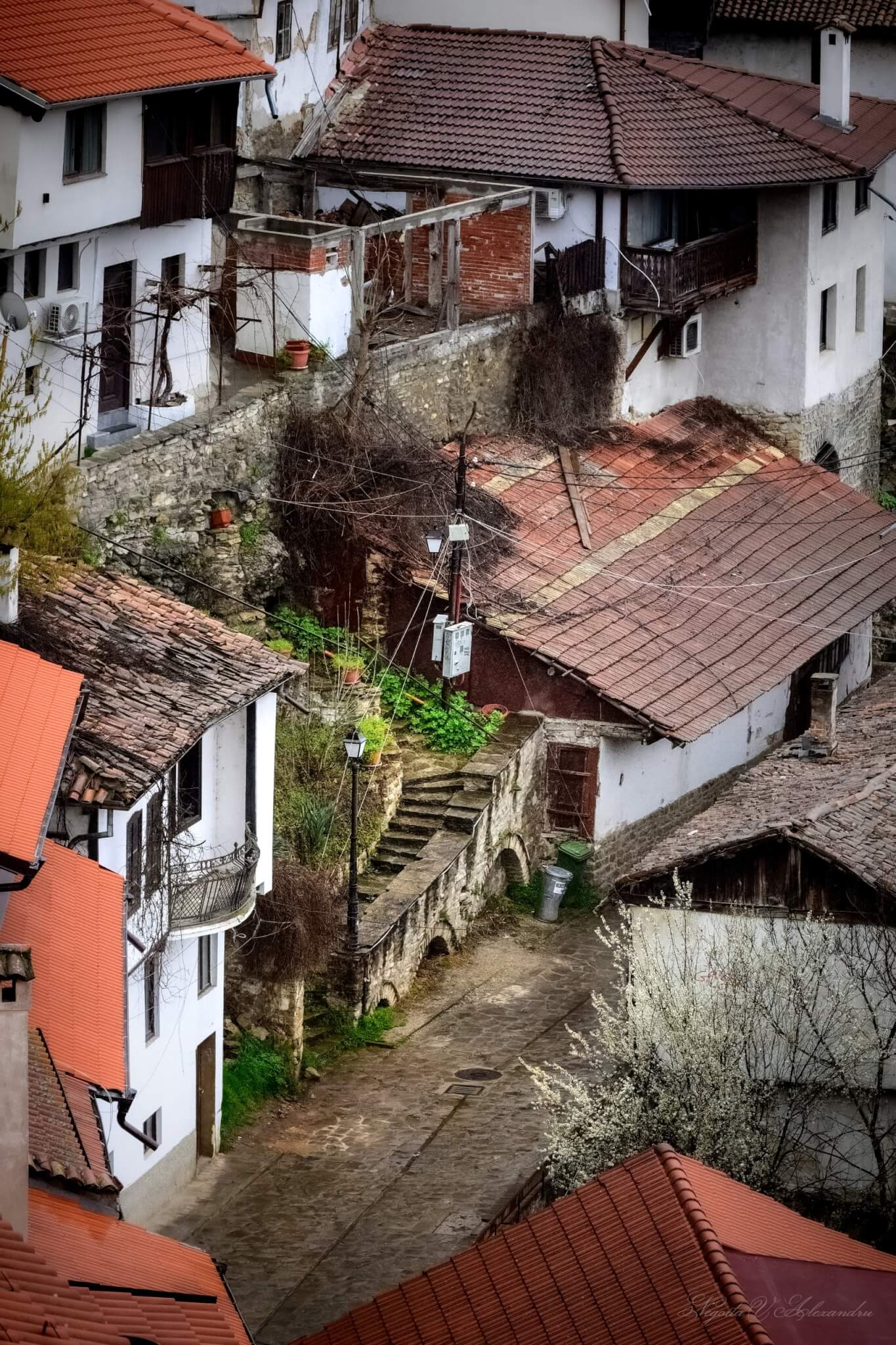
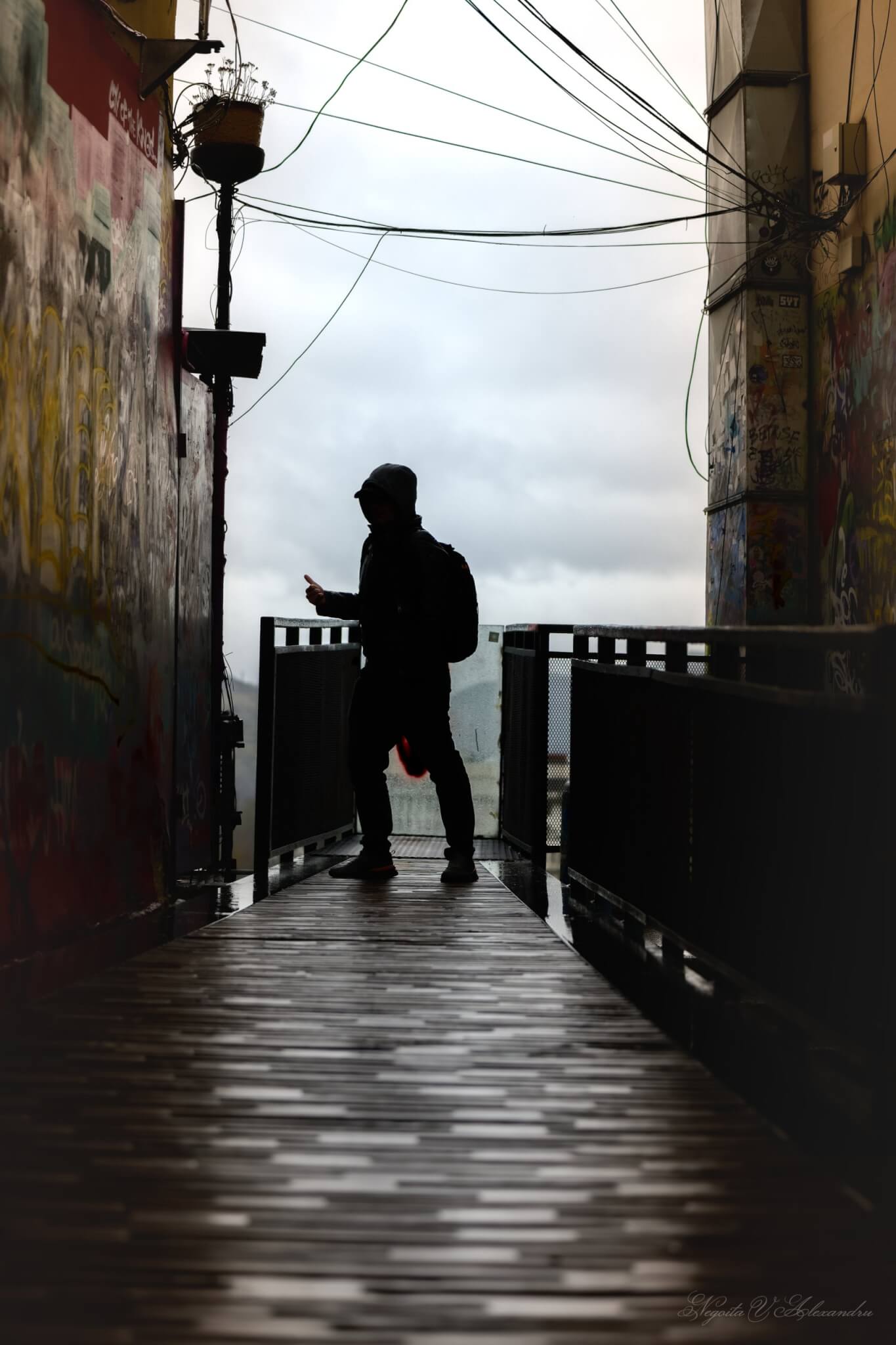
Sure, it was our fault. Tired, in a foreign country, thinking more about the road than about signs. But it doesn’t help much when you realize that next to an empty parking spot. Luckily, everything got resolved relatively quickly. We recovered the car, paid the “lesson”, and got back on the road. And inevitably, my mind drifted back to the photos. To the silence in the hide. To the first wings that appeared in the sky, to the controlled chaos around the prey.
It was, without exaggeration, one of the best weekends of the year. And probably the best way to return to writing, after a long break. Because sometimes you don’t need perfect plans. Just a “one spring” that, at some point, actually happens.
The next mission?
The Danube Delta.
When?
“Some May”… of course! 🙂